
You've done it. We've all done it. You pick up your phone "just for a second" – and suddenly it's 45 minutes later, you've watched 17 cooking videos, three life hacks you'll never use, and a dog wearing sunglasses. And your eyes feel like sandpaper.
The blue glow of screens is everywhere. It's in our hands, on our desks, in our beds. It keeps us alert when we want to relax, and it fills our evenings with noise when we crave quiet.
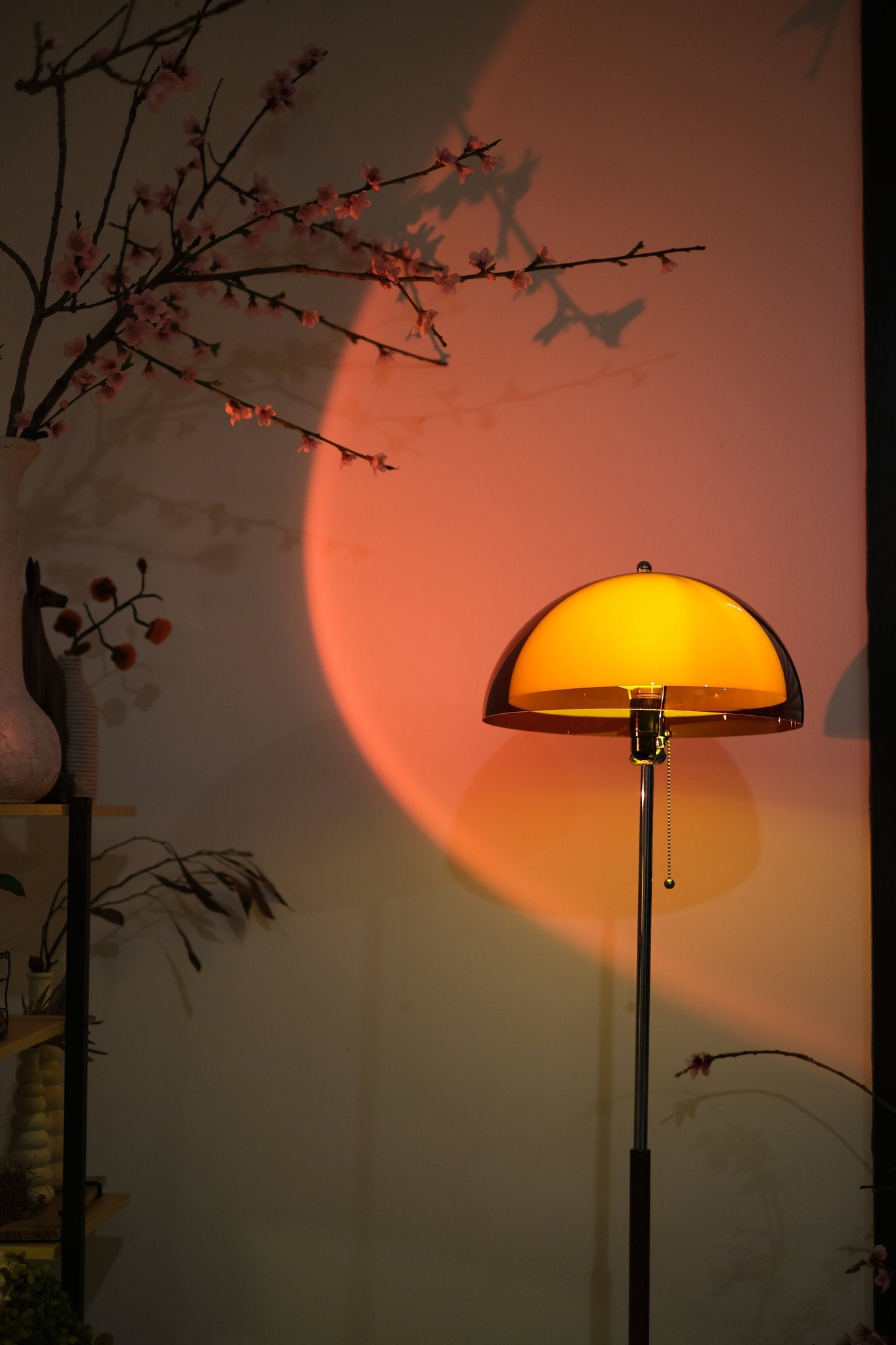
But here's the thing. There's a different kind of glow waiting for you. It doesn't scroll. It doesn't notify. It doesn't demand your attention. It just… sits there, warm and steady, reminding you that the real world is still here.
That's the magic of an amber lamp.
And it might be exactly what your evenings need in 2026.
Why Your Brain Craves Amber Light
There's a reason firelight feels so good.
Our ancestors gathered around fires for hundreds of thousands of years. That warm, flickering glow meant safety, connection, and rest. Your brain still associates amber light with those things – even if you're just sitting on your sofa in 2026.
What amber light does:
-
Triggers melatonin production (the sleep hormone)
-
Lowers cortisol (the stress hormone)
-
Slows your heart rate
-
Signals your brain that the day is done
What your phone does:
-
Suppresses melatonin
-
Keeps cortisol humming
-
Keeps your brain alert and reactive
-
Tricks your body into thinking it's still midday
The difference isn't subtle. It's biological. When you swap the blue glow of scrolling for the warm glow of an amber lamp, you're not just changing the lighting. You're changing how your entire nervous system responds to the end of the day.
The Scroll Trap
Here's how it usually goes.
You finish dinner. You sit down on the sofa. You pick up your phone "just to check something." And then you're gone.
TikTok. Instagram. News. More TikTok. Each video is designed to keep you watching. The endless scroll is literally engineered to be addictive. And the blue light keeps your brain awake, even while you're "relaxing."
The cost:
-
Tired, strained eyes
-
Poor sleep quality
-
Increased anxiety
-
Lost time with actual humans in your actual home
The alternative:
Leave your phone in the other room. Turn on an amber lamp. Let the warm, steady glow fill the space. And just… be.
It sounds simple because it is. But simple doesn't mean easy. That's why creating a separate "evening zone" with amber light helps – it physically shifts you out of screen mode.
For more on setting up calming evening spaces, our guide on the Screen-Free Hour: Lamps That Help You Unwind has plenty of ideas.
The Kinetic Warmth of Amber Light

Here's something designers talk about but most people don't notice.
Amber light isn't just warm – it's active. Not in a flashy, move-your-eyes way, but in how it plays with surfaces.
It catches the grain in timber. It softens the edges of furniture. It makes shadows feel like part of the room, not an absence of light. The light itself feels alive, even though it's perfectly still.
That's what designers mean by "kinetic warmth." The light doesn't move, but the room feels different. You feel different. There's a quiet energy in the space that never existed under harsh overheads.
Try this: Light only with an amber lamp for one evening. No overheads. No other lamps. Watch how the shadows change as you move around the room. Notice how your own body feels different in that light.
Where to Use Amber Lamps
The Bedroom
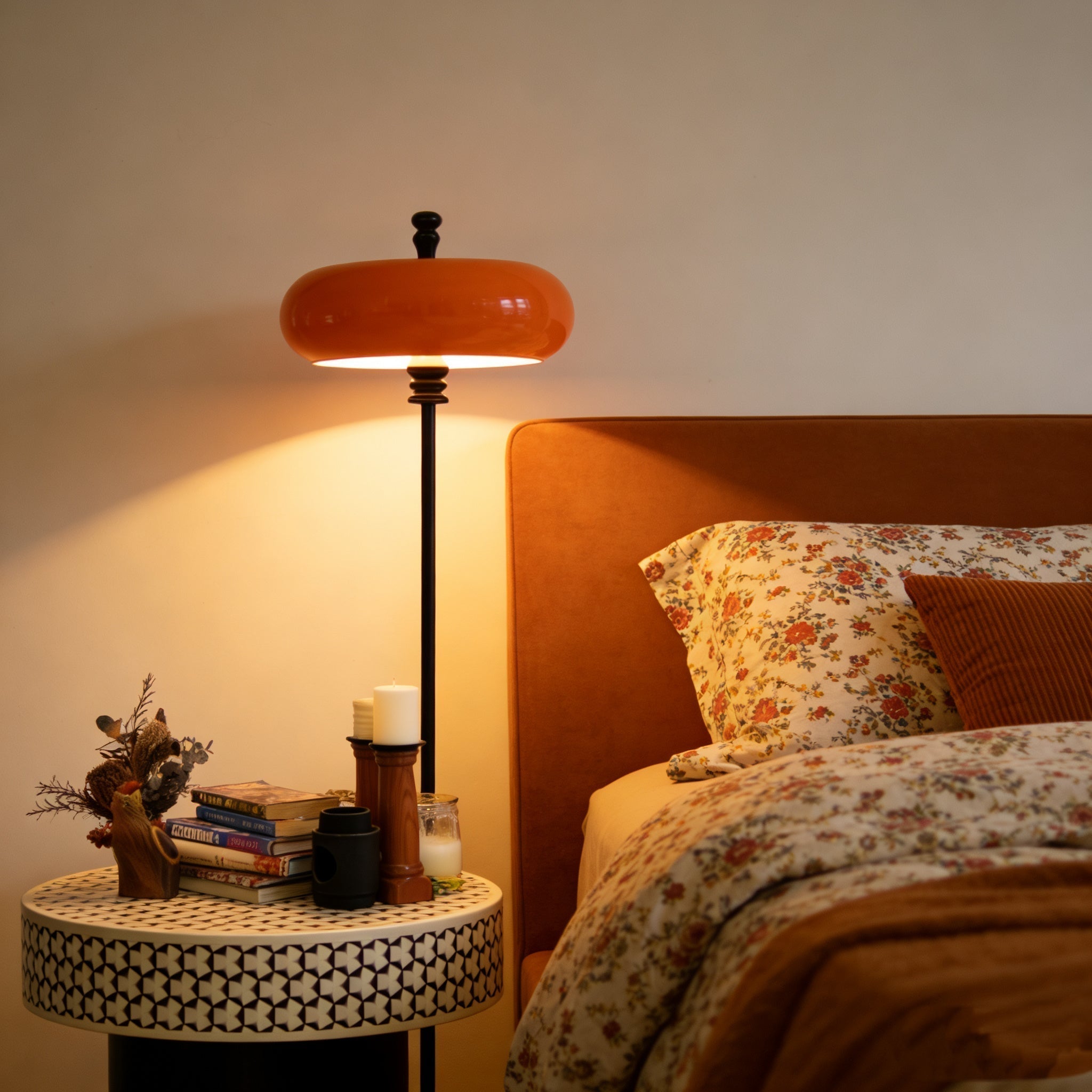
This is where amber light really shines. Replace your cool bedside lamp with an amber lamp. Read under it. Scroll under it (if you must). Notice how much easier it is to fall asleep after.
The Living Room
Ditch the overheads. Use an amber floor lamp beside the sofa. Pair it with a small amber lamp on a side table. Create a zone where screens are optional and presence is the default.
The Dining Room
Dinner under warm amber light feels like a restaurant, not a cafeteria. It makes food look better, people look better, and conversations flow more easily. Use a dimmable table lamp or pendant with an amber bulb.
The Home Office
During the day, bright light helps you work. But when the sun goes down, switch to amber. It signals your brain that work is over – even if you're still sitting at the same desk.
Explore our collection of soft light lamps and amber lamps for each of these spaces.
Amber Lamps vs. Blue Light Glasses
You've probably heard of blue light glasses. Maybe you even own a pair. They filter out the blue wavelengths from screens, supposedly reducing eye strain and improving sleep.
They're not useless. But they treat the symptom, not the cause.
An amber lamp treats the cause. Instead of filtering the light from your screen, it replaces the entire lighting environment with something fundamentally different. It shifts your room – and your brain – from "work/alert" mode to "rest/recover" mode.
The difference:
-
Blue light glasses: Wear something on your face, keep doing the same thing
-
Amber lamp: Change your environment, change your behaviour
One is a band-aid. The other is a ritual.
For more on eye-healthy lighting, our guide on what kind of light reduces eye strain covers the research.
The Ritual of Turning Off

Here's a simple practice to try.
Every evening, at a specific time (say 8pm), do this:
-
Put your phone face-down on a table
-
Turn off every cool-white light in the room
-
Turn on your amber lamp
-
Sit with it for a few minutes. No phone. No book. Just the light.
That's it. It's not complicated. But that small ritual marks the end of "screen time" and the beginning of "your time."
Your brain will start to associate that amber lamp with the feeling of permission to relax. It becomes a trigger – a healthy, beautiful trigger – that says: "You're done. Rest now."
What to Look For in an Amber Lamp

Not all amber lamps are created equal. Here's what matters.
Colour Temperature
Aim for 2200K to 2400K – that's true amber territory, not just "warm white." It mimics candlelight and firelight.
Dimmability
Amber light is best at low brightness. Always choose a dimmable lamp or bulb.
Shade Material
Fabric, paper, or frosted glass all work well. Avoid anything that lets you see the bare bulb – the light should be diffused.
Size and Placement
One small amber lamp is enough to transform a room. Place it at eye level (on a side table, shelf, or desk) for maximum effect.
Browse our range of retro lamps to find your perfect evening companion.
Quick Checklist: Making the Switch
Tonight:
-
Turn off every cool-white light after dinner
-
Light only with an amber lamp or warm lamp (2700K or lower)
-
Leave your phone in another room for at least one hour
This week:
-
Buy one amber lamp for your bedside or living room
-
Swap any cool bulbs in your evening spaces for warm amber bulbs
-
Set a "screen cut-off" time and use your amber lamp as the signal
The Bottom Line
Your phone is designed to keep you scrolling. Your brain is designed to respond to amber light.
Right now, the phone is winning. But it doesn't have to.
One amber lamp won't solve everything. But it can shift your evening from "more screen time" to "time for you." It can replace the blue glow of distraction with the warm glow of presence.
And honestly? The real world – the one with the lamp, the room, and you in it – is way more interesting than anything on TikTok.
Ready to swap scrolling for something better? Explore our collection of amber lamps and soft light lamps at Homezee today.
Start with our collection of warm, diffusing lamps – perfect for creating that gentle, kinetic glow in your living space.
And for those quiet, screen-free moments, browse our selection of all lighting – each one designed to cast beautiful, eye-comforting amber light exactly where you need it.
FAQs
1. What's the difference between an amber lamp and a warm white lamp?
Amber lamps sit at the warmest end of the spectrum – around 2200K to 2400K – mimicking candlelight and firelight. Warm white is 2700K, which is still warm but more versatile. Amber is specifically for evening relaxation and winding down, while warm white works for general cosy lighting.
2. Can an amber lamp help me sleep better?
Yes. Amber light contains very little blue wavelength, which means it doesn't suppress melatonin production. Using an amber lamp in the hour before bed helps your brain transition naturally toward sleep.
3. Is amber light bright enough to read by?
Yes, but you'll want a brighter amber lamp (400+ lumens) for reading. For just relaxing, a lower brightness is fine. Always choose a dimmable amber lamp so you can adjust based on your activity.
4. Do I need to replace all my lamps with amber ones?
No. Just use amber lamps in your evening spaces – the bedroom, living room, and any area where you wind down. Keep warm white or cool white for daytime and task-specific areas.
5. Can I use an amber lamp with a smart bulb?
Yes. Many smart bulbs allow you to adjust colour temperature all the way to amber (2200K). Just set an evening routine that automatically switches your lights to amber at sunset.
Still have questions about amber lighting? Our Homezee team is here to help. And if you're looking for lamps for sale that bring warm, screen-free glow to your home, we've got you covered.