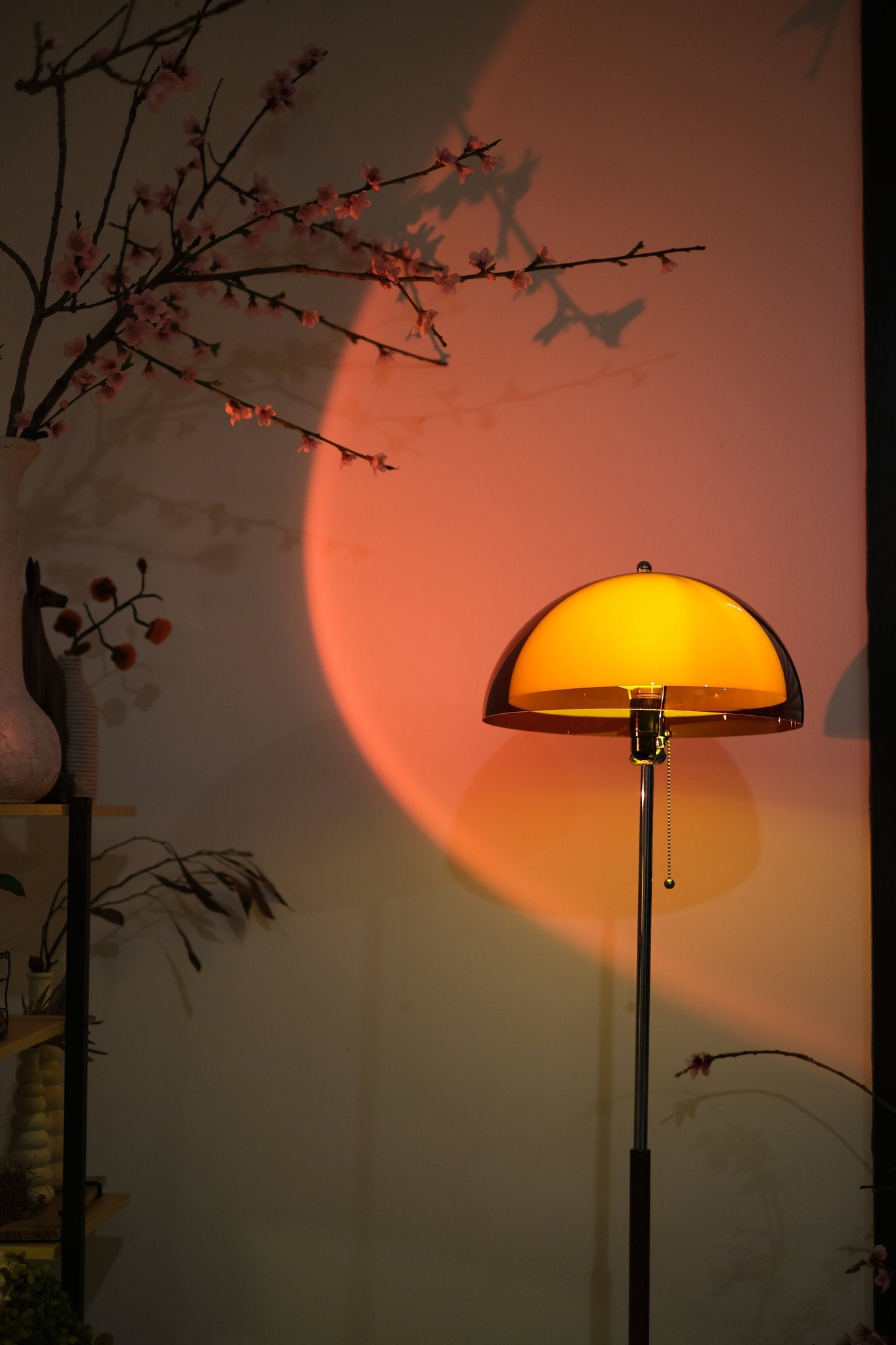

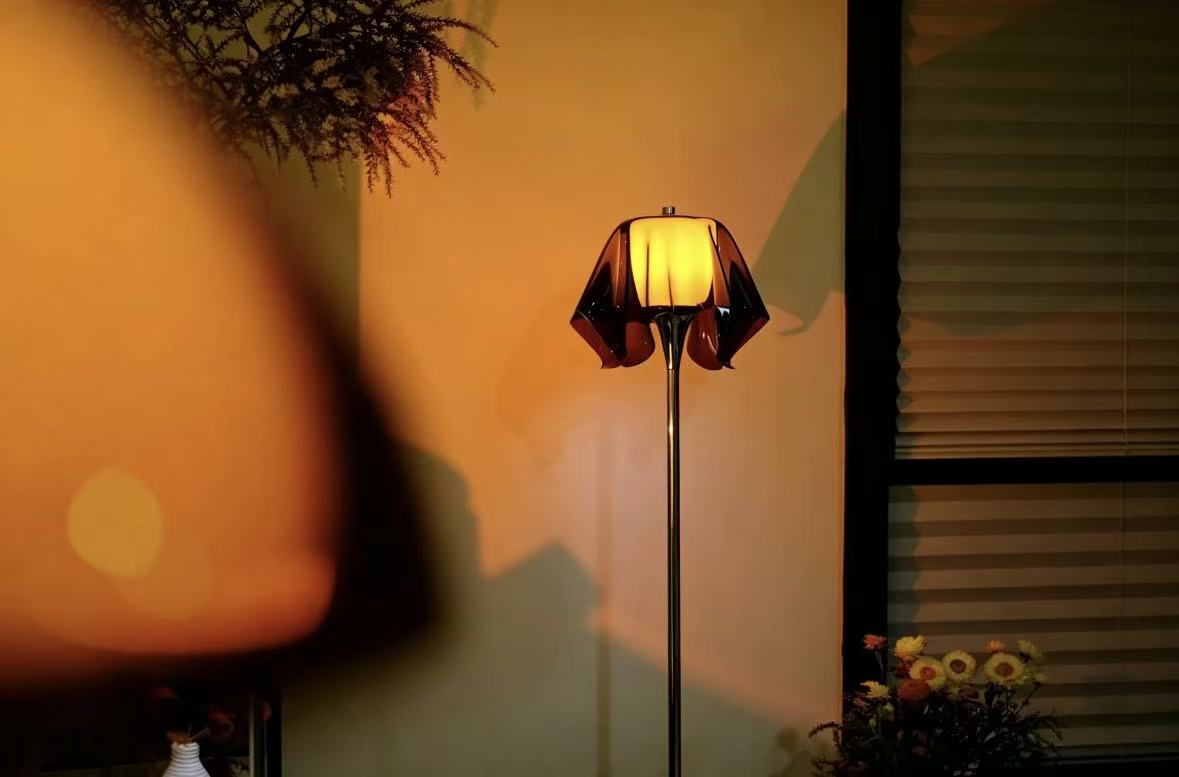
What’s going on? Is your lamp playing tricks on you?
Nope. It’s just physics. And once you understand it, you can use it to your advantage – making any bulb look better in any lamp, or choosing the right lamp to get the light you actually want.
Here’s the lowdown.
The Lampshade Is the Biggest Variable

If you take one thing away from this article, make it this: the shade matters more than the bulb.
A bulb on its own throws light in all directions. It’s raw, unfiltered, and often harsh. The moment you put a shade over it, everything changes. The shade decides how much light escapes, where it goes, and what colour it appears.
A fabric shade, for example, diffuses light beautifully. It softens the edges, warms up the colour, and creates that gentle glow everyone loves. The same bulb in a bare metal shade will look completely different – more direct, more intense, and often cooler.
So when you swap a bulb between lamps, you’re not just changing the bulb. You’re changing the entire optical system around it.
For more on how shades change light, check out our guide on how to pick the right lampshade.
Shade Shape and Direction Matter
Think about where the light is going.
A drum shade spreads light evenly in all directions – up, down, and around. A cone or empire shade directs more light downward, making it better for reading. A tall, narrow shade focuses light up and down, leaving the middle darker.
The same bulb in a drum shade will feel bright and room-filling. In a narrow shade, it’ll feel more concentrated and moody. In a shade that’s open at the top, you’ll get a ceiling glow. In one that’s closed, all the light goes down.
None of this is about the bulb. It’s about the shape of the shade and the direction it sends the light.
Material and Colour Change Everything
Shade material is a huge factor.
Linen or cotton: Diffuses light softly, warms it up slightly, and creates a cosy, even glow.
Paper: Similar to fabric but often brighter and crisper. It scatters light in a more uniform way.
Glass: Lets more light through, but can create glare. Clear glass shows the bulb; frosted glass diffuses it. Coloured glass tints the light – sometimes dramatically.
Metal: Opaque and reflective. It directs light rather than diffusing it. The inside colour matters too – a white interior reflects more light, a gold interior warms it up, a dark interior absorbs it.
So a warm white bulb in a linen shade might look golden and cosy. The same bulb in a clear glass shade might look cooler and more clinical. In a brass shade, it might look warmer and richer. The bulb hasn’t changed – the shade has.
The Bulb’s Position Inside the Shade

Where the bulb sits inside the shade changes how the light escapes.
If the bulb is fully inside the shade, the light has to pass through the material. That diffuses and softens it. If the bulb sticks out the bottom or top, you get direct light – brighter, harsher, and more focused.
The same bulb in a lamp where it’s fully enclosed will look softer and more ambient. In a lamp where it’s exposed, it’ll look brighter and more task-oriented.
This is why two lamps with the same bulb can feel completely different. One hides the bulb; the other shows it off.
Reflections and Surrounding Surfaces

Your room isn’t a vacuum. Light bounces.
A lamp sitting on a glossy white side table will reflect light back up into the room, making everything brighter. The same lamp on a dark timber table will absorb light, making the room feel dimmer and moodier.
Walls matter too. Light walls bounce light around; dark walls soak it up. A bulb that looks bright in a white room might look dull in a navy one.
So when you move a bulb between lamps, you’re also moving it between different reflective environments. The bulb is the same – the room is not.
Height and Angle Change Perception
Where the lamp sits in the room changes how you perceive the light.
A bulb in a high ceiling pendant spreads light across the whole room. The same bulb in a low table lamp creates a pool of light right where you are. Your eyes adapt to the dominant light source, so the same brightness can feel completely different depending on placement.
Angle matters too. A lamp pointing at a wall creates indirect, soft light. A lamp pointing at you creates direct, potentially glaring light. Same bulb, different angle, different experience.
Your Eyes Adapt (and Play Tricks)

Here’s the sneaky one. Your eyes are constantly adjusting to the light around them.
If you move a bulb from a bright room to a dark one, it will look brighter at first – because your eyes are dark-adapted. If you move it from a dim lamp to a bright one, it might look dimmer than expected.
This is called sensory adaptation. Your perception of brightness is relative, not absolute. So the same bulb can feel different simply because your eyes are comparing it to different surroundings.
Quick Checklist: Why Your Bulb Looks Different
-
Shade material: Fabric diffuses, glass directs, metal reflects.
-
Shade shape: Drum spreads, cone focuses, narrow concentrates.
-
Bulb position: Enclosed softens, exposed brightens.
-
Surroundings: Light walls bounce, dark walls absorb.
-
Height and angle: High spreads, low pools, angled changes direction.
-
Your eyes: Adaptation makes brightness relative.
The Bottom Line
The same bulb looks different in different lamps because a lamp is not just a holder for a bulb. It’s an optical instrument. The shade, the material, the shape, the position, the room – they all shape the light before it reaches your eyes.
So if you’ve got a bulb that looks perfect in one lamp but weird in another, don’t blame the bulb. Change the shade, move the lamp, or adjust the position. You’ll be amazed at what a difference it makes.
And if you’re looking for lamps that make the most of any bulb, explore our collection of floor lamps, table lamps at Homezee. Each one is designed to bring out the best in your light.
FAQs
1. Why does my bulb look cooler in one lamp and warmer in another?
The shade material and colour are the main reasons. A fabric or linen shade tends to warm up the light, while a clear glass or metal shade can make it look cooler. The bulb itself hasn’t changed – the shade is filtering it differently.
2. Can I make a bulb look warmer without changing the bulb?
Yes. Swap to a fabric or linen shade, or add a warm-toned liner. You can also use a dimmer – dimming a warm bulb often makes it look even warmer.
3. Why is my bulb brighter in one lamp than another?
It’s usually about the shade. An open shade lets more light out; a closed or dense shade blocks it. The bulb’s position also matters – if it’s partially exposed, it will look brighter than if it’s fully enclosed.
4. Does the colour of the inside of the shade matter?
Absolutely. A white interior reflects more light and keeps the colour neutral. A gold or brass interior warms the light. A dark interior absorbs light and makes the bulb seem dimmer.
5. Will the same bulb look different in a floor lamp vs a table lamp?
Yes. Floor lamps are usually higher and spread light over a larger area. Table lamps are lower and create more concentrated pools of light. Your eyes also perceive brightness relative to the surroundings, so the same bulb can feel completely different in each.