
You know that feeling. After a long day staring at screens – work laptop, phone, TV, back to laptop – your eyes feel like they’ve run a marathon. Dry. Achy. Heavy. You rub them, blink a few times, but the discomfort sticks around.
Here’s the thing: your home lighting might be making it worse.
The wrong kind of light forces your eyes to work harder. They have to constantly adjust, refocus, and fight glare. No wonder you’re exhausted.
But the right light? It lets your eyes relax. It’s like giving your visual system a gentle break, hour after hour. And once you know what to look for, creating an eye‑friendly home is surprisingly simple.
Let’s talk about what kind of light actually reduces eye strain – and how to get it in every room.
Colour Temperature: Warm Is Your Friend
Remember that harsh, blue‑white light in office buildings and supermarkets? That’s the enemy of comfortable vision.
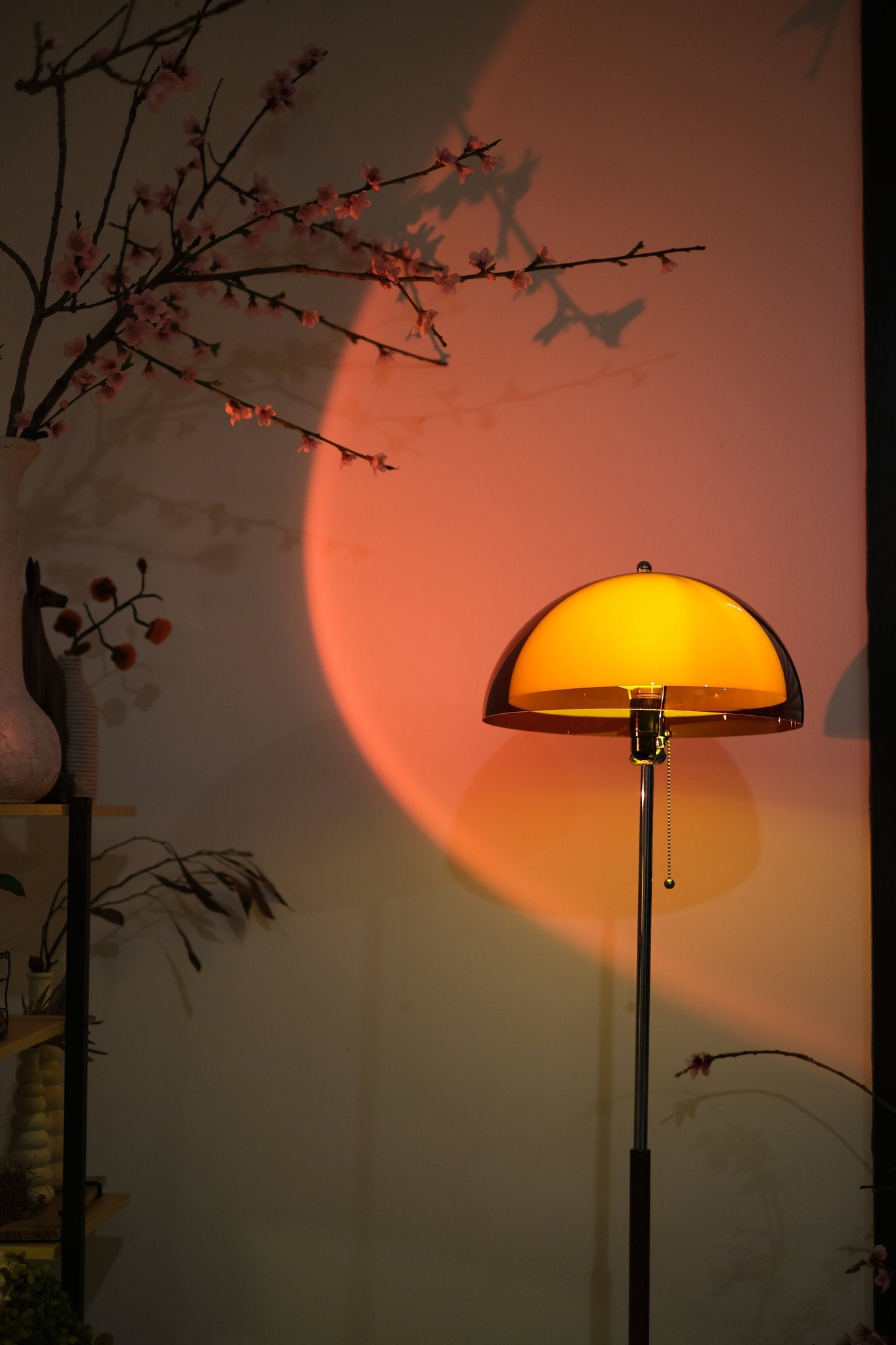
What your eyes need: Warm light in the range of 2700K to 3000K for living spaces and bedrooms. This is the same warm glow as sunset or a traditional incandescent bulb. It’s gentle on the retina and doesn’t force your pupils to constrict aggressively.
Why it helps: Cool light (4000K and above) contains more blue wavelengths, which scatter more inside your eye. This creates glare and makes your focusing muscles work overtime. Warm light scatters less, so your eyes can relax.
The fix: Swap every cool white bulb in your living areas, bedroom, and home office for warm white (2700K). Keep cool light for garages, laundry rooms, or task lighting where you need to see fine detail – but even then, avoid going over 4000K.
For more on why warmth matters for your well‑being, check out our article on the science of cozy.

Glare: The Silent Eye Strain Culprit
Glare is when light hits your eyes directly – from a bare bulb, a shiny lampshade, or a reflection on your screen. Most people don’t even notice it, but their eyes do.
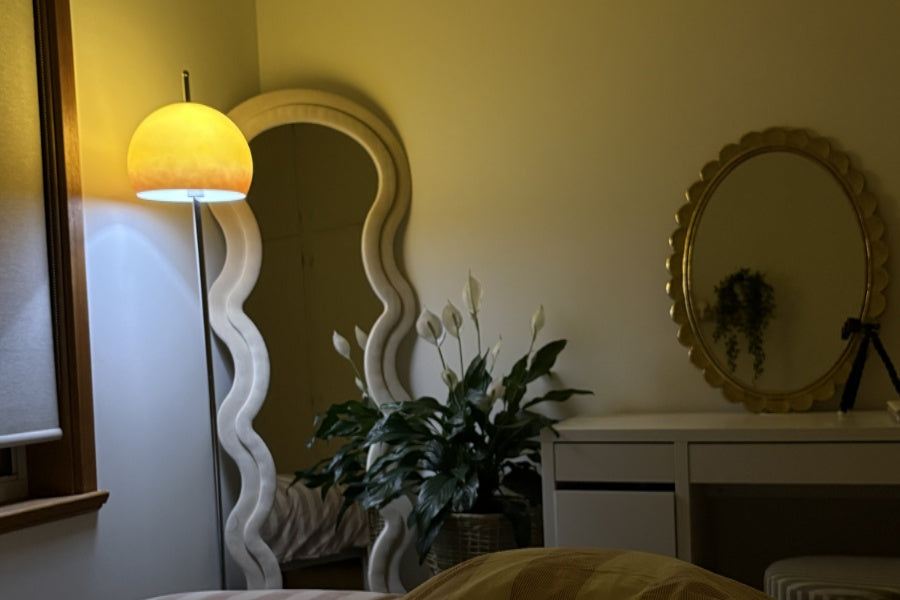
What your eyes need: Diffused, indirect light that bounces off walls, ceilings, or shades before reaching you.
Why it helps: Direct light creates harsh contrast between bright sources and dark backgrounds. Your eyes have to constantly adjust between the two, leading to fatigue. Diffused light reduces that contrast, so your pupils don’t have to work as hard.
The fix:
- Use fabric, linen, or frosted glass shades – never bare bulbs
- Position lamps so the shade sits at or above eye level, angled away from your face
- Bounce floor lamps off walls or ceilings (torchiere styles work well for this)
- Angle your computer screen to avoid reflections from windows or ceiling lights
Flicker: The Hidden Headache Maker
Not all LED bulbs are created equal. Cheap ones flicker – not always visibly, but enough for your brain to notice. That constant, microscopic flickering forces your eyes to keep adjusting, leading to strain, headaches, and even anxiety over time.
What your eyes need: Flicker‑free LEDs with stable, consistent output.
Why it helps: When light is steady, your visual system doesn’t have to compensate for rapid changes in brightness. Your pupils stay relaxed, and your brain doesn’t have to process interference patterns.
The fix:
- Look for bulbs labelled “flicker‑free” or “no flicker”
- Buy from reputable brands (cheap no‑name bulbs are the worst offenders)
- Use dimmable bulbs with compatible dimmers – mismatched dimmers can create flicker
- Consider integrated LED fixtures where the manufacturer has matched the driver to the LED
When shopping for lamps for sale, check the product specs or ask our team – we only stock flicker‑free options at Homezee.

CRI: Seeing Colours Naturally
CRI stands for Colour Rendering Index. It measures how accurately a light source shows colours compared to natural sunlight. Low CRI light makes everything look dull, grey, or slightly off – and your eyes have to work harder to distinguish details.
What your eyes need: A CRI of 80 or higher for general use, and 90+ for tasks like reading, makeup, or art.
Why it helps: When colours look natural, your brain processes visual information more easily. You don’t have to squint to tell navy from black or guess whether that vegetable is fresh. Less processing = less eye strain.
The fix: Check the CRI rating on bulb packaging. Most quality LEDs are 80+, and premium ones hit 90–95. Avoid anything below 80.
For more on light quality, our guide on how to choose the right bedside table lamps covers CRI alongside other important specs.
Brightness: Not Too Much, Not Too Little
Your eyes strain in both overly bright and overly dim conditions. Too bright causes glare and squinting. Too dim forces you to lean in and strain to see details.
What your eyes need: The right brightness for the task at hand – and the ability to adjust it throughout the day.
General guidelines:
- Ambient living room: 10–20 lumens per square metre
- Reading: 400–600 lumens directed onto the page
- Computer work: 200–300 lumens around the screen (not behind it)
- TV watching: Very low, indirect light – 50–100 lumens
The fix: Use dimmers everywhere. Bright when you need to clean or work, low when you want to relax. A dimmable floor lamp or table lamp gives you full control.
Also, match your brightness to your screen. If you’re on a laptop in a dark room, the contrast between the bright screen and dark surroundings strains your eyes. Add a small lamp behind or beside the screen to balance the light.

Positioning: Where You Put the Light Matters
Even the perfect bulb in the perfect lamp can cause eye strain if it’s in the wrong spot.
What your eyes need: Light coming from the side or slightly behind you, never directly in your line of sight.

The fix:
- For reading: Place your floor lamp beside your chair, shade angled toward the page, not your face.
- For computer work: Position lamps so they don’t reflect off your screen. Side lighting is best.
- For TV watching: Put a small lamp behind or beside the TV to reduce contrast, not in front of it.
- For general living: Use multiple sources at different heights so no single lamp dominates.
Try the “hand test”: hold your hand between your eye and the lamp. If you see a harsh shadow of your hand on what you’re trying to look at, the lamp is too direct. Move it or add diffusion.
Quick Checklist: Eye‑Friendly Lighting at a Glance
Do this today:
- Swap cool white bulbs for warm white (2700K)
- Add dimmers to your most‑used lamps
- Replace bare bulbs with fabric or frosted shades
- Move lamps so they’re beside, not behind or in front of, your seating
- Add a small lamp behind your computer or TV
Avoid this:
- Cool white or daylight bulbs in living areas
- Single overhead light as your only source
- Bare bulbs anywhere you spend time
- Staring at a bright screen in a dark room
- Cheap, flickering no‑name LEDs
Your eyes work hard every single day. Give them a break with lighting that supports them, not fights them.
Ready to See the Difference?
At Homezee, we design and curate lighting that’s gentle on your eyes and beautiful in your home. From warm, flicker‑free LEDs to diffusing shades and dimmable controls – everything we sell is chosen with your visual comfort in mind.
Explore our full collection of all lamps, and smart bulbs today.
And if you’re still not sure where to start, reach out to our team. We’ll help you build a lighting setup that reduces strain, lifts your mood, and makes every room feel like it was designed for you.
FAQs
1. Is warm or cool light better for reducing eye strain?
Warm light (2700K–3000K) is significantly better for reducing eye strain in homes. Cool light (4000K+) contains more blue wavelengths that scatter inside your eye, creating glare and forcing your focusing muscles to work harder. Save cool light for garages or detailed task areas only.
2. Can a floor lamp help with eye strain while watching TV?
Yes. The problem with TV viewing is the high contrast between the bright screen and a dark room. Place a floor lamp or small lamp behind or beside the TV, aimed at the wall. This creates soft, indirect light that balances the screen brightness without causing glare. Keep it dim – around 50–100 lumens.
3. What’s the best bulb type for reading without straining my eyes?
Look for an LED bulb with:
- Warm colour temperature (2700K)
- 400–600 lumens
- High CRI (80+)
- Flicker‑free rating
- Dimmable
Pair it with a lamp that has an adjustable arm or shade so you can direct light exactly where you need it.
4. Does natural light reduce eye strain compared to artificial light?
Natural daylight is excellent for your eyes – as long as it’s not direct, glaring sunlight. Position your desk or reading chair near a window with diffused light (sheer curtains help). But natural light changes throughout the day, so you’ll still need good artificial lighting for evenings and cloudy days. The goal is warm, diffused, flicker‑free light – whether it’s natural or artificial.
5. How do I know if my current lighting is causing eye strain?
Look for these signs:
- You squint or rub your eyes frequently
- Your eyes feel dry, tired, or achy after being in a room
- You get headaches, especially in the evening
- You find yourself moving your chair or angling your body away from a lamp
- You turn off the overhead light and feel immediate relief
If any of these sound familiar, try swapping bulbs, adding dimmers, and repositioning your lamps. Small changes make a huge difference.
Still have questions? Our Homezee team is always here to help you find the most comfortable, eye‑friendly lighting for your home.