
There’s something special about a light that feels almost like artwork.
That is exactly the charm of Ink Silk. By bringing the expressive beauty of ink-inspired artistry onto a delicate textile surface, Ink Silk turns an everyday pendant light into something warmer, softer, and much more personal.
But what makes this craft so beautiful? And why does it work so naturally with modern pendant lighting?
Let’s get into the story behind it.
What Is Ink Silk?

Ink Silk is a decorative textile craft that brings the visual language of traditional ink art onto a silk-like fabric surface.
Think flowing brushstrokes, subtle tonal changes, organic shapes, and the beautiful balance between darker and lighter areas. Instead of creating a perfectly uniform surface, the technique allows the material to carry a sense of movement and artistic expression.
The result is a lampshade with depth.
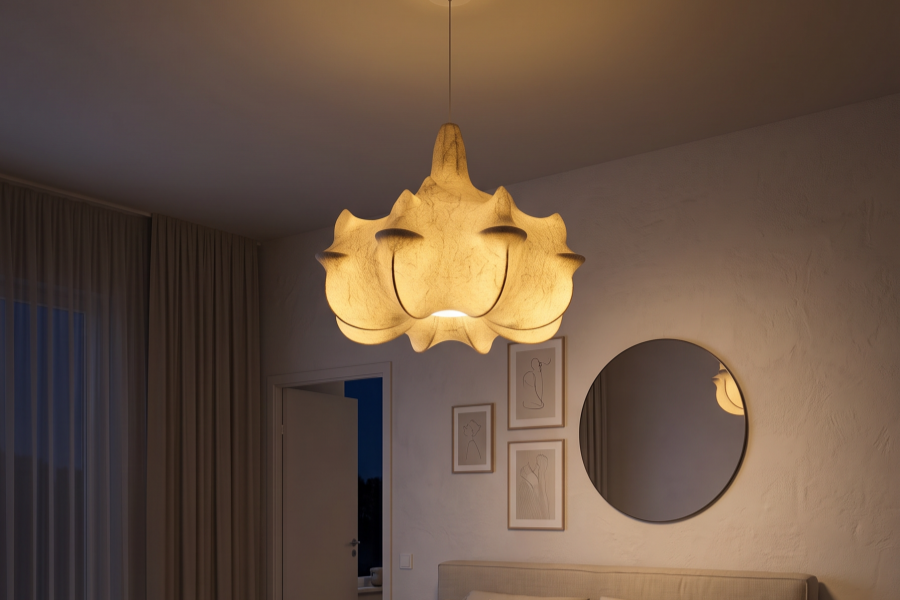
During the day, the Ink Silk surface adds texture and visual interest to the room. Once the light is switched on, the fabric takes on a completely different character as the warm glow gently passes through it.
That transformation is one of the most beautiful things about Ink Silk pendant lights.
The Artistic Inspiration Behind Ink Silk

The story of Ink Silk is closely connected to the long tradition of ink art on silk.
Silk has been used as an artistic surface in Asia for centuries, while ink painting developed its own distinctive visual language through expressive strokes, tonal variation, and an appreciation of space. Historical silk paintings demonstrate how naturally ink and silk can work together as an artistic medium.
Ink art isn't simply about drawing a picture.
It is about rhythm, balance, movement, and atmosphere.
A single brushstroke can feel energetic. A softer wash can suggest distance or mist. An area of untouched space can be just as important as the ink itself.
When these ideas are translated into lighting, the pendant shade becomes more than a covering for a bulb. It becomes a surface where light and artistry meet.
Why Silk Makes Such a Beautiful Lighting Material

Silk has a naturally elegant appearance, but its relationship with light is what makes it particularly fascinating for pendant lamps.
A textile shade can soften the light source and create a gentler atmosphere. Silk adds its own delicate texture and subtle sheen, giving the illuminated surface a refined, almost glowing quality.
This is why silk pendant lighting has such a distinctive presence in interiors. Contemporary silk lighting is often designed around the idea of creating soft, diffused illumination while keeping the fixture visually sculptural.
With Ink Silk, there is another layer.
The artwork interacts with the light.
The darker ink-inspired details become part of the glow, while lighter areas allow more illumination to come through. The same pendant can therefore look slightly different depending on the time of day and whether the light is switched on.
It feels alive.
The Beauty Is in the Brushwork

One of the things that makes Ink Silk so appealing is its artistic quality.
Ink-inspired patterns don't have to be perfectly symmetrical. In fact, their beauty often comes from the movement of the brush and the relationship between different shades.
A flowing mark can create a sense of motion.
A soft wash can make the shade feel lighter.
A deeper stroke can give the design a visual anchor.
Together, these details create a pendant light that feels considered without feeling overly decorative.
This is especially beautiful in homes where people want lighting to have personality rather than simply provide illumination.
From Traditional Art to Modern Lighting
This is where Ink Silk becomes particularly exciting.
Traditional artistic techniques don't have to stay in traditional interiors.
Today, designers are increasingly interested in bringing craftsmanship, natural textures, and cultural influences into contemporary homes. We can see the same idea in modern lighting collections that reinterpret traditional textile techniques through clean, contemporary forms.
Ink Silk fits beautifully into that movement.
Imagine a simple dining room with a timber table, neutral walls, soft linen curtains, and an Ink Silk pendant hanging above the centre.
The furniture keeps the room clean and modern.
The Ink Silk shade adds the story.
That balance is what makes the material so versatile.
Why Ink Silk Pendant Lights Feel So Warm

Good lighting changes how a room feels.
A cold, overly bright ceiling light can make a room feel purely functional. A softer pendant can make the same space feel more intimate.
Ink Silk takes this one step further by adding visual softness to the light itself.
The textile surface helps create a gentle glow, while the ink-inspired pattern adds subtle shadows and tonal depth.
This makes Ink Silk pendant lights particularly suited to spaces where atmosphere matters:
-
Dining rooms
-
Living rooms
-
Bedrooms
-
Reading corners
-
Entryways
-
Kitchen islands
-
Relaxed hospitality spaces
Above a dining table, for example, an Ink Silk pendant can create a natural focal point while making evening meals feel warmer and more inviting.
Ink Silk Works Beautifully With Modern Interiors
You don't need a traditional home to appreciate Ink Silk.
In fact, the contrast between contemporary furniture and an artistic textile pendant can be incredibly beautiful.
Japandi Interiors
Natural timber, neutral colours, simple furniture, and soft lighting make an ideal backdrop for Ink Silk.
Minimalist Homes
When the rest of the room is deliberately simple, an Ink Silk pendant can introduce texture without overwhelming the space.
Organic Modern Interiors
Stone, wood, linen, ceramics, and other natural materials naturally complement the tactile quality of Ink Silk.
Contemporary Dining Spaces
An Ink Silk pendant above a dining table can act as both lighting and artwork, giving the room a strong focal point without making it feel overly formal.
And if you're thinking about how to keep pendant lighting contemporary rather than overly trend-driven, Homezee's guide on how to use pendant lights in 2026 without looking dated offers some useful styling ideas.
Ink Silk Is More Than a Pattern
It can be tempting to look at an Ink Silk pendant and simply describe it as “a patterned lampshade.”
But that misses the point.
The beauty of Ink Silk comes from the relationship between material, craftsmanship, artistry, and light.
The fabric provides the surface.
The ink-inspired design provides expression.
The pendant structure gives it form.
And the light brings everything together.
When these elements work as one, the result feels much more like a decorative object than an ordinary lighting fixture.
That is the magic of this craft.
How Ink Silk Changes After Dark

Perhaps the best moment to experience an Ink Silk pendant is after sunset.
During daylight hours, you can appreciate the surface, pattern, and texture.
Then the bulb comes on.
Suddenly, the shade becomes part of the lighting itself.
The pattern takes on greater depth. The textile appears warmer. The room around it becomes softer.
It is almost like watching an artwork change when illuminated.
This is why Ink Silk works particularly well as a feature light. It has something to offer both when the light is off and when the room comes alive at night.
How to Style an Ink Silk Pendant Light
The easiest approach is to let the pendant breathe.
You don't need to fill the room with competing patterns.
Pair an Ink Silk pendant with natural textures such as:
-
Light or dark timber
-
Linen
-
Cotton
-
Stone
-
Ceramic
-
Rattan
-
Neutral upholstery
For colour, warm whites, beige, taupe, soft grey, natural brown, and muted earth tones can create a calm backdrop that allows the Ink Silk artwork to stand out.
If the shade has stronger ink-inspired details, keep the surrounding décor relatively simple.
Think of the pendant as the artwork in the room.
Everything else can support the story.
Why Ink Silk Belongs in Modern Homes
Modern interiors are moving toward spaces that feel personal rather than perfectly staged.
People want homes that feel comfortable, warm, tactile, and individual.
That is exactly where Ink Silk fits.
It brings craftsmanship into an everyday object.
It combines an artistic tradition with contemporary lighting.
And most importantly, it creates a pendant that can be appreciated for more than its shape.
There is a story behind it.
There is texture.
There is movement.
There is the interaction between ink-inspired artwork and warm light.
That gives an Ink Silk pendant a character that is difficult to achieve with a completely ordinary lampshade.
The Story Continues With Every Light
Perhaps the most beautiful thing about Ink Silk is that the story doesn't end when the craft is finished.
It continues every time you switch on the light.
In the morning, the shade can feel quiet and decorative.
During the afternoon, natural light reveals its texture and artistic details.
At night, the warm illumination brings the ink-inspired design to life again.
It becomes part of everyday moments: dinner with family, a late-night conversation, a quiet cup of tea, or simply coming home after a long day.
That is what makes Ink Silk more than a lighting technique.
It is a way of bringing art into everyday life.
And that is the story behind Ink Silk pendant lights.
FAQs
1. Why is Ink Silk suitable for pendant lights?
The textile surface works beautifully with illumination. When the pendant is switched on, light interacts with the fabric and enhances the depth and character of the ink-inspired design.
2. Are Ink Silk pendant lights suitable for modern homes?
Yes. Their combination of artistic texture and contemporary lighting makes them suitable for minimalist, Japandi, organic modern, Scandinavian, and contemporary interiors.
3. Does Ink Silk look different when the light is switched on?
Yes. Illumination can reveal different tonal qualities and make the artwork appear deeper and more expressive than it does under natural daylight.
4. What furniture works well with Ink Silk lighting?
Natural wood, linen, stone, ceramics, rattan, and neutral-coloured furniture all pair beautifully with the organic and artistic character of Ink Silk.
5. Why choose an Ink Silk pendant light?
Because it offers more than illumination. Ink Silk combines craftsmanship, artistic inspiration, soft texture, and beautiful light to create a pendant that feels personal and timeless.