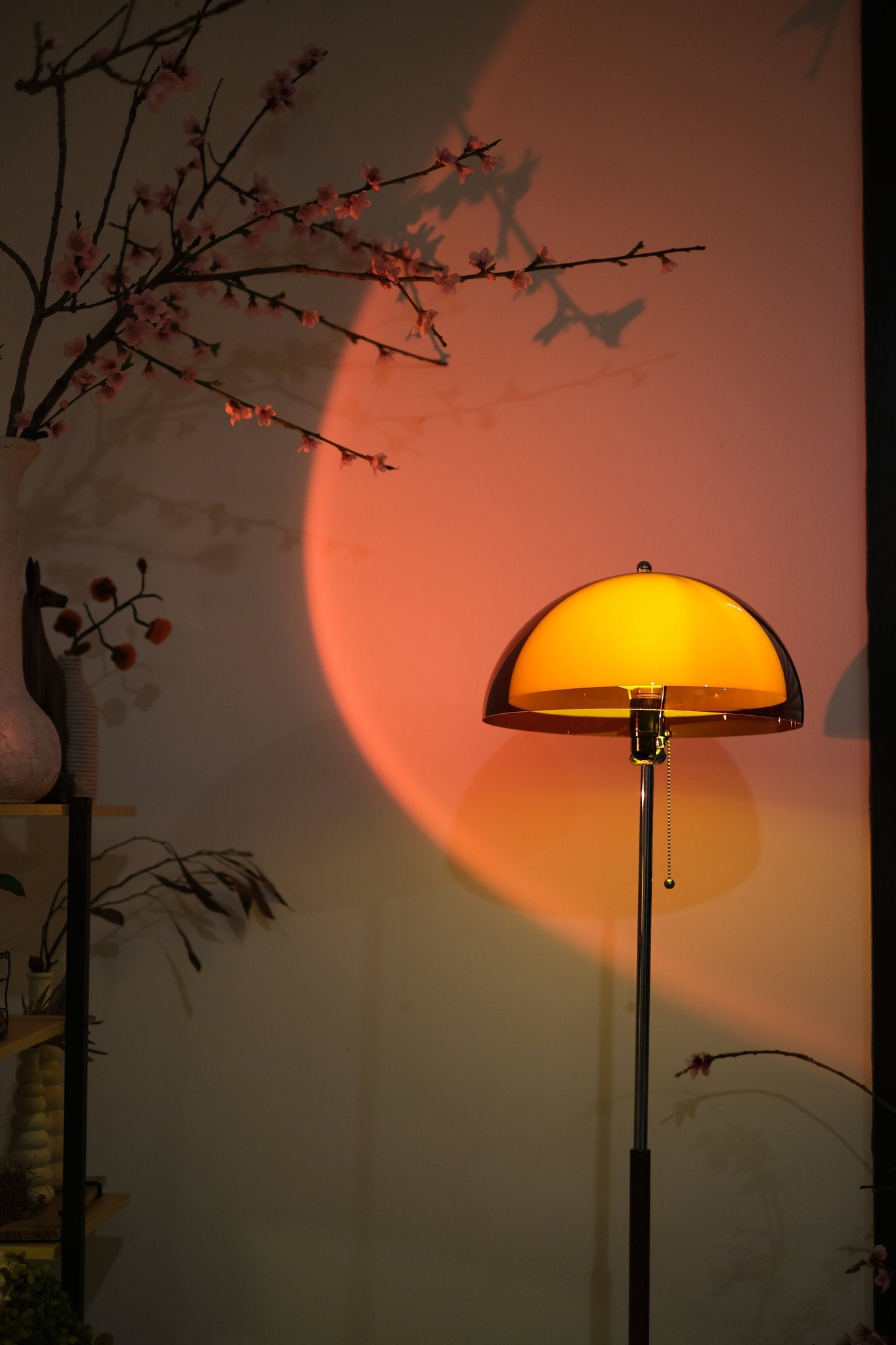


So, you’ve finally decided to give your home a glow-up? Whether you’re building your dream house from scratch or just realized your current living room vibes are more "interrogation room" than "cozy sanctuary," choosing the right homeware lighting is a massive deal.
But here’s the thing: Australia isn’t exactly the Wild West when it comes to electricity. We have some of the strictest (and honestly, smartest) lighting standards in the world. If you’re browsing for Australian lighting online, you’ve probably seen codes like AS/NZS 1680 or NCC Section J and thought, "I just wanted a lamp, not a PhD in physics."
Don't sweat it. In this guide, we’re going to break down everything you need to know about Australian lighting requirements in plain, everyday English.
1. The "Energy Budget": Why 5 Watts is the Magic Number

If there’s one thing you take away from this, let it be the 5-Watt Rule. In Australia, the National Construction Code (NCC) has a very clear opinion on how much power we should be using to light our homes.
Currently, for a standard residential house, the total power of all your permanently installed lights (the ones wired into the ceiling or walls) shouldn't exceed 5 watts per square meter (5W/$m^2$).
Why does this matter for your homeware lighting?
In the old days, a single incandescent bulb could be 60W or 100W. If you put two of those in a small bedroom, you’d already be breaking the rules! This is why LED technology has completely taken over the Australian lighting market. A modern LED bulb can give you the same amount of light as that 60W dinosaur but only use about 7W to 9W.
Pro Tip: When you’re planning your layout, don't just "pepper" the ceiling with downlights. It’s bad for the budget and bad for the vibe. Instead, use fewer, high-quality LEDs and supplement them with floor lamps (which often don’t count toward your fixed wattage limit!).
2. Lux Levels: Getting the Brightness Just Right
Have you ever tried to chop onions in a dim kitchen or felt like your eyeballs were vibrating in a workspace that was too bright? That’s a "Lux" problem.
"Lux" is simply the measurement of how much light is actually hitting a surface. While the Australian Standard AS/NZS 1680 is technically for workplaces, it’s the gold standard that designers use for homes too. Here’s a conversational breakdown of what you should aim for:
The Kitchen

You need about 300 lux on your countertops. Why? Because safety. You’re dealing with sharp knives, hot stoves, and measuring spoons. You need to see exactly what you’re doing.
-
The Look: Go for bright, under-cabinet LED strips or powerful pendant homeware lighting over the island bench.
The Living Room

You don’t need much here—usually 50 to 150 lux. If it’s too bright, you’ll get glare on the TV and it won’t feel cozy.
-
The Look: Dimmers are your best friend. They allow you to hit 150 lux when you're cleaning up, and drop it down to 20 lux when the movie starts.
The Bathroom

Lighting in bathrooms is tricky because of shadows. You want around 200-300 lux at the mirror so you can apply makeup or shave without missing a spot.
-
The Look: Avoid a single light directly over your head—it creates "horror movie" shadows under your eyes. Place lights on either side of the mirror instead.
3. The "RCM Tick": Don't Buy a Fire Hazard
We all love a bargain, and it’s tempting to order a super cheap designer knock-off lamp from a random overseas website. But wait!
Australia has a specific certification called the Regulatory Compliance Mark (RCM). It looks like a little triangle with a tick inside. If your homeware lighting doesn't have this, or an equivalent SAA approval, it hasn't been tested for the Australian electrical grid.
Why is this a big deal?
-
Safety: Our grid runs at 230V-240V. Some overseas lights are designed for 110V. If you plug them in here, they can literally pop, smoke, or catch fire.
-
Insurance: If a non-compliant light starts a fire, your insurance company might just laugh and say, "Yeah, we’re not paying for that."
Always check that your Australian lighting supplier is selling "RCM compliant" gear. It’s worth the extra few bucks for peace of mind.
4. IP Ratings: Can Your Light Handle the Splash?
In Australia, we have very strict "zones" for bathrooms and outdoor areas. You can't just put any pretty pendant over a bathtub. This is where IP (Ingress Protection) Ratings come in.
-
Zone 0 (Inside the shower/bath): Needs serious protection (IP67). Basically, it could be submerged.
-
Zone 1 (Right above the shower): Needs to handle splashes (usually IP44 or higher).
-
Outdoor Lighting: If you’re lighting up your deck or garden, look for IP65. It’ll handle the Sydney humidity or a Melbourne downpour without shorting out.
When shopping for bathroom homeware lighting, always ask the salesperson: "Is this IP44 rated?" If they look at you blankly, keep walking!
5. Color Temperature: Warm vs. Cool

This isn't strictly a "law," but it’s a huge part of the Australian lighting design standards (AS/NZS 1680). Lighting color is measured in Kelvins (K).
-
2700K - 3000K (Warm White): This is what you want for 90% of your home. It’s yellow-toned, cozy, and makes people look better.
-
4000K (Cool White): This is a "business" light. It’s great for the garage, the laundry, or a home office. It keeps you alert.
-
5000K+ (Daylight): Honestly? Avoid this in homes. It’s very blue and can make your beautiful homeware lighting look like a sterile laboratory.
In 2026, the big trend is "Human-Centric Lighting." This means lights that change color throughout the day—bright and cool in the morning to wake you up, and warm and dim in the evening to help your brain produce melatonin.
6. The "Sparky" Rule: Why You Can’t DIY
I know, I know—you saw a YouTube video and think you can swap that old oyster light for a fancy new chandelier yourself. Stop right there.
In Australia, it is illegal to do your own fixed electrical wiring. Anything that involves opening up a wall or a ceiling rose must be done by a licensed electrician (a "sparky").
-
The Certificate: When they finish, they should give you a "Certificate of Electrical Safety." Keep this! You’ll need it if you ever sell the house.
-
The Loophole: You can DIY anything that has a plug. Table lamps, floor lamps, and "DIY-style" batten covers for existing sockets are all fair game for the weekend warrior.
Some Final Words
Lighting is the "jewelry" of your home. It’s the final touch that makes everything else look expensive and well-designed. By sticking to these Australian standards, you’re not just following the rules—you’re ensuring your home is a safe, efficient, and beautiful place to live.