
The Homezee Edit

Beyond Illumination: Using Light to Define Your Personal Peace
Most of us spend thousands on a "cloud" sofa or ergonomic chairs, but then we settle for a single, soul-sucking fluorescent bulb in the middle of the ceiling. We wonder why we feel twitchy, or why we can’t seem to "turn off" our brains at 9:00 PM. The truth is, your home isn’t just made of wood and brick; it’s made of atmosphere. And the biggest secret to mastering that atmosphere is space lighting. It’s not just about seeing where you’re walking; it’s about how you feel while you’re walking there. If you’ve ever felt an instant wave of calm walking into a high-end spa or a boutique hotel, you weren't just smelling eucalyptus—you were experiencing professional-grade lighting design. In this guide, we’re going deep into everything you need to know about space lighting to turn your home into a high-vibe sanctuary. 1. Stop Thinking "Bright," Start Thinking "Layers" The biggest mistake people make about space lighting is thinking that one big light is enough as long as it’s "bright." That’s not a home; that’s an interrogation room. To find your personal peace, you need to think in layers. Think of space lighting like an outfit. You don’t just wear a heavy winter coat and nothing else, right? You layer. Ambient Lighting (The Base Layer): This is your general "I can see the floor" light. Instead of one harsh overhead, think about recessed lights or even a large paper lantern that glows softly. Task Lighting (The Functional Layer): This is for when you’re actually doing things. Whether it’s a sexy brass lamp for reading or under-cabinet LEDs for chopping onions, task lighting keeps you from straining your eyes. Stress starts in the eyes, so treat them well. Accent Lighting (The Vibe Layer): This is where the magic happens. A spotlight on a plant, a light strip behind the TV, or a small lamp on a bookshelf. This layer adds "depth." When you have all three, your room feels three-dimensional and cozy. It creates a "cocoon" effect that tells your nervous system, "You’re safe now." 2. The Science of "Warmth" If you’re serious about space lighting, you have to understand Kelvins ($K$). Light has a temperature, and it dictates your mood more than you realize. 2700K - 3000K (Warm White): This is the "Golden Hour" in a bulb. It’s cozy, intimate, and relaxing. This is what you want in your bedroom and living room. 4000K - 5000K (Cool/Daylight): This mimics the high-noon sun. It’s great for focus, but if you use it at night, your brain thinks it’s 12:00 PM on a Tuesday. To define your peace, you need to banish those "office-white" 5000K bulbs from your relaxation zones. Using warm space lighting in the evening helps your body produce melatonin, the "sleepy hormone." If your lights are too blue or too bright at night, you’re basically yelling at your brain to stay awake. To get this right, you need the perfect bulb—here is a quick guide to choosing the best one for your space 3. Room-by-Room Peace Strategies Every room has a different job, so every room needs a different approach to space lighting. The Living Room: The Multi-Tasker Your living room is where you host friends, but it’s also where you rot on the couch after a hard day. You need versatility. The pro tip here? Dimmers. Being able to slide the brightness down as the sun goes away is the ultimate luxury. It allows the room to shrink visually, making you feel tucked in. The Bedroom: The "No-Fly" Zone for Blue Light Your bedroom should be a sacred space. When we talk about space lighting in the bedroom, we’re talking about "indirect" light. You don't want a bulb staring you in the face. Use lamps with fabric shades that diffuse the light. Pro tip: Put a motion-sensor light strip under your bed. If you get up to pee at 3:00 AM, it glows softly on the floor rather than blinding you with an overhead switch. The Bathroom: From Utility to SPA Most bathrooms feel like a gas station at midnight. To find peace here, add a small, dimmable lamp on the counter or a waterproof LED strip behind the mirror. Taking a bath in soft, amber space lighting is a completely different experience than taking one under a buzzing white tube. 4. Shadows Are Your Friends Here’s something most people don’t get about space lighting: Shadows are just as important as the light itself. A room with no shadows is flat and boring. Peace is found in the contrast. The way a lamp throws a "scallop" of light against a textured wall, or the way a plant casts a leafy silhouette in the corner—that’s what makes a home feel alive and organic. When you plan your space lighting, don't try to fill every dark corner. Leave some mystery. It makes the lit areas feel more intentional and warm. 5. The Magic of Smart Lighting We live in 2026; you shouldn't be walking around flicking six different switches to "set the mood." Smart space lighting is the ultimate tool for a peaceful life. You can set "scenes." "Good Morning" Scene: Lights slowly fade in at a warm 2000K, mimicking a sunrise. "Wind Down" Scene: At 8:00 PM, all the overheads turn off, and your accent lamps dim to 20%. When your house automatically adjusts to your biological needs, that’s one less thing for your brain to manage. That’s automated peace. 6. The Aesthetic of the Fixture Lastly, remember that space lighting isn't just about the photons hitting the wall; it’s about the "sculpture" holding the bulb. A beautiful floor or table lamp is a piece of art even when it’s turned off. Look for natural materials—rattan, linen, frosted glass, or brushed brass. These materials interact with light in a way that feels "human." Avoid cheap, shiny plastic that creates harsh glares. When the sun hits a crystal chandelier or a textured shade, it creates a "dance" of light that can be incredibly meditative to watch. Conclusion: Light as a Love Letter to Yourself At the end of the day, obsessing about space lighting isn't about being fancy; it’s about acknowledging that your environment affects your soul. Life is loud, fast, and often stressful. You deserve a home that gives you a "visual hug" the moment you walk through the door. By layering your space lighting, choosing the right warmth, and embracing the beauty of shadows, you aren't just decorating—you are defining the boundaries of your personal peace.
Learn more
What Does a Smart Light Bulb Do?
When most people first hear about smart light bulbs, they think it’s the peak of "first-world problems." Why on earth would anyone need an app to turn off a light when the switch is right there on the wall? But here’s the thing: once you actually live with one, going back to a "dumb" bulb feels like going back to a flip phone. It’s not just about being lazy; it’s about making your home environment work for you. In this guide, we’re going to dive deep into what a smart light bulb actually does, why the lamp with smart bulb combo is a game-changer, and how these little glass orbs can actually change your daily life. 1. The Basics: It’s Not Your Grandma’s Light Bulb At its simplest, a smart light bulb is an LED bulb with a brain. Inside that plastic or glass casing is a tiny wireless receiver (Wi-Fi, Bluetooth, or Zigbee). This allows the bulb to talk to your phone, your smart speaker, or even other devices in your house. Unlike a traditional bulb that only knows "On" and "Off," smart light bulbs are constantly connected. Even when the light is "off," the bulb is in a low-power standby mode, waiting for you to tell it what to do next. 2. Remote Control: The "Did I Leave the Lights On?" Savior We’ve all been there. You’re halfway to work or already at the airport when that nagging feeling hits: Did I leave the kitchen light on? With a smart bulb, that anxiety disappears. You just open an app on your phone and check. If it’s on, one tap kills it. This isn't just about saving a few cents on your electric bill; it’s about total peace of mind. You can control your lights from a beach in Bali or from your office desk—as long as you have an internet connection, you’re in charge. 3. Voice Control: Living the Sci-Fi Dream If you have an Amazon Alexa, Google Assistant, or Apple HomePod, you’re already halfway there. Pairing smart light bulbs with voice assistants is where the real fun starts. Imagine walking into the house with both hands full of heavy groceries. Instead of fumbling for the switch in the dark, you just say, "Hey Google, I'm home," and the hallway and kitchen light up instantly. Or, when you’re mid-movie and the glare on the TV is annoying, you just whisper to your remote, "Alexa, dim the living room to 10%." It’s seamless, hands-free, and feels like living in the future. 4. Why the "Lamp with Smart Bulb" Setup is a Pro Move One of the biggest misconceptions is that you need to replace your entire ceiling fixture or hire an electrician to get smart lighting. Nope. The easiest way to start is by taking any existing lamp with smart bulb technology. The Bedroom Lamp: Put a smart bulb in your bedside lamp. You can set it to gradually dim over 30 minutes at night to tell your brain it’s time to sleep. The Desk Lamp: Use a bulb that can switch between "Concentration" (cool blue light) and "Relax" (warm yellow light). The Floor Lamp: Turn that corner lamp into a piece of art by setting it to a deep sunset orange or a soft forest green. The beauty of the lamp with smart bulb approach is that it’s portable. If you move apartments, you just unscrew the bulb and take the "smarts" with you. It’s the ultimate DIY home upgrade. 5. Millions of Colors and the Power of "Scenes" Standard bulbs give you one color: a yellowish-white. Smart bulbs give you the whole rainbow—literally 16 million colors. But it’s not just for throwing parties. It’s about "Scenes." A "Scene" is a preset look for your room. For example: Movie Scene: The main lights turn off, and the lamp behind the TV glows a dim navy blue. Reading Scene: Your favorite lamp turns to a bright, crisp white at 80% brightness. Dinner Scene: All the lights in the dining area dim to a warm, candle-like glow. With one tap on your phone, you can completely change the vibe of your home. It’s like being a movie director for your own living room. 6. Health and Wellness: Hacking Your Circadian Rhythm This is the "nerdy" side of what smart light bulbs do, but it’s actually the most beneficial. Our bodies are tuned to the sun. Bright blue light in the morning wakes us up; warm amber light in the evening helps us produce melatonin. Most smart bulbs have a "Circadian" or "Auto-Match" feature. Morning: The lights start off dim and warm, then slowly shift to a bright, energizing daylight white by 10:00 AM. Evening: As the sun sets, the bulbs automatically lose the blue tones and shift back to warm amber. This can seriously improve your sleep quality and focus. If you’ve ever struggled to fall asleep after staring at bright white lights all night, this feature alone is worth the investment. 7. Security: Making the House Look "Lived In" Old-school timers are predictable. Burglars know that if the porch light turns on at exactly 7:00 PM every night, it’s probably a timer. Many smart light bulbs have an "Away Mode" or "Vacation Mode." This feature turns the lights on and off at random intervals throughout the evening. To anyone watching from the outside, it looks like someone is actually moving from the kitchen to the living room and then to the bedroom. It’s a cheap and effective way to boost your home security. 8. Energy Efficiency and Your Wallet Yes, smart bulbs cost more upfront (anywhere from $10 to $50 per bulb). However, they are all LEDs. An LED bulb uses about 75% to 80% less energy than a traditional incandescent bulb. Plus, because you can dim them via an app (dimming a bulb uses even less power) and you can set them to turn off automatically when you leave the house, the energy savings add up over time. Most smart bulbs are rated to last 15 to 25 years with normal use, so you won't be replacing them anytime soon. Do You Really Need One? If you just want to see in the dark, a $1 bulb from the hardware store works fine. But if you want a home that wakes you up gently, keeps you safe while you’re on vacation, and sets the perfect mood for a date night with a single voice command, then smart light bulbs are a no-brainer. Start small. Buy one lamp with smart bulb for your bedroom or living room. Play with the colors, set a schedule, and see how it feels. Chances are, within a week, you'll be wondering how you ever lived without them.
Learn more
Arc Floor Lamp vs. Straight Lamp: Which One Does Your Room Need?
You're standing in the aisle—okay, more likely scrolling on your phone—and you're stuck between two very different vibes. The arc floor lamp, with its dramatic sweep and instant "wow" factor. Or the straight floor lamp, clean, classic, no-nonsense. Both are floor lamps. Both give you light. But they feel completely different in a room. So which one actually belongs in your space? Here's the thing: there's no universal right answer. But there is a right answer for your room, your lifestyle, and the way you want to feel when you walk through the door. Let's figure out what that is. First Things First: What Are We Comparing? Let's get clear on what we're actually talking about. Arc Floor Lamps are the ones with that long, curved arm that extends out from the base and hangs over your seating area. They're designed to position light exactly where you need it—usually right above your sofa or chair—without taking up space in the middle of the room. The base sits off to the side, the arm does all the reaching. Straight Floor Lamps are exactly what they sound like. A vertical pole, a base, a shade. The light goes up, down, or all around, depending on the design, but it's centred over the base. They stand tall and straightforward, doing their job without any architectural drama. Think of the arc as the confident friend who walks into a room and owns it, and the straight lamp as the reliable one who makes everything better just by being there. The Arc Floor Lamp: Drama That Actually Works Let's talk about why arc floor lamps have become such a thing in Australian homes. What Makes It Special The arc lamp's superpower is placement flexibility. Because the arm extends out, you can position the base against a wall or behind furniture while the light hangs exactly where you want it—over your sofa, above your dining table, next to your reading chair. No other floor lamp can do that. It also makes a statement. A well-chosen arc lamp is architectural. It draws the eye, creates a focal point, and instantly lifts the design of any room. In 2026, when sculptural shapes and statement pieces are everywhere, the arc lamp fits right in. Where It Shines Over the sofa: This is the classic use. The arc reaches out and casts light onto your seating area without you needing a table or sideboard to balance a lamp on. Above a dining table: If you can't do a pendant light (renting, low ceiling, indecision), an arc lamp positioned beside the table works beautifully. In a corner with a chair: Create a reading nook by placing the arc so the light pools right over your favourite spot. Open-plan spaces: The arc helps define zones. A lamp over the sofa says "this is the living area" even in a big, flowing room. What to Watch For Arc lamps need space. The arm extends out, so you need to consider traffic flow—you don't want people walking into it every five minutes. They also work best with higher ceilings; in a low room, the arc can feel overwhelming rather than elegant. Browse our collection of arc floor lamps to see how different designs handle these proportions. The Straight Floor Lamp: Classic for a Reason Now let's give the straight floor lamp its due. It's been around forever because it just works. What Makes It Special Straight floor lamps are versatile and unfussy. They slide into corners, tuck next to furniture, and do their job without demanding attention. If you want light without a whole conversation, this is your pick. They're also easier to place. The footprint is small—just the base—so they fit in tighter spots where an arc lamp would feel cramped. And because the light source is contained, they're often better for directed task lighting, especially if the shade is adjustable. Where It Shines Next to a reading chair: A straight lamp with an adjustable arm or a directed shade puts light exactly on your page. In a corner: Tuck it into an empty corner to fill shadow and add warmth without blocking anything. Behind a sofa: Use it to wash light up the wall for ambient glow. This is a classic layered lighting trick. Narrow spaces: Hallways, small living rooms, apartments—anywhere floor space is precious. What to Watch For The limitation is reach. The light is centred over the base, so you're placing the lamp where you need the light, not where it's convenient. If you want light over your sofa but don't have a side table, a straight lamp won't solve that problem. Explore our range of straight floor lamps to see the variety of styles available. How to Choose: Questions to Ask Yourself Still stuck? Ask yourself these three questions. Where Does the Light Actually Need to Go? If you need light directly over your sofa or dining table and there's no overhead option, an arc floor lamp is your only real solution. If you just need general ambient light or focused light next to your reading chair, a straight floor lamp will do the job beautifully. How Much Space Do You Have? Measure your room. An arc lamp needs clearance—you don't want people dodging it every time they walk past. If your living room is on the cosy side, a straight lamp is the safer, more practical choice. What Vibe Are You Going For? This matters more than you think. An arc lamp says "I thought about this." It's intentional, curated, design-conscious. A straight lamp says "comfortable and functional." Both are good vibes—they're just different. Think about how you want your room to feel. For more on how lighting shapes a room's atmosphere, our guide on 2026 lighting trends has plenty of inspiration. The 2026 Way: Using Both Together Here's a thought. You don't actually have to choose. In 2026, the best-lit homes aren't picking one type of lamp and calling it done. They're layering. An arc floor lamp over the sofa for focused, dramatic light. A straight floor lamp in the corner for ambient warmth. Table lamps on side tables for soft glow. Pendant lights for definition. Each one does a different job, and together they create something no single lamp could manage. If you've got the space and the budget, consider how an arc and a straight lamp might work together in your living room. The arc does the heavy lifting visually; the straight lamp fills the gaps and adds depth. Arc vs Straight: The Bottom Line So here's where we land. Choose an arc floor lamp if you want drama, if you need light positioned over furniture without an overhead fixture, and if you've got the ceiling height and floor space to let it breathe. Choose a straight floor lamp if you want versatility, if your space is tight, if you need focused task light, or if you prefer a lamp that supports your room without stealing the show. And if you can't decide? Get both. Use them together. That's how lighting actually works in real homes. Ready to find your perfect match? Explore our full collection of floor lamps for living room, from dramatic arcs to classic straights. And if you're still planning your lighting layout, our guide on layered lighting might help you see the bigger picture.
Learn more
How to Clean Pendant Lights: A Step-by-Step Maintenance Guide
When you first picked out those pendant lights, you were probably envisioning a Pinterest-perfect kitchen or a moody, sophisticated dining nook. You weren't thinking about the tiny army of dust bunnies currently staging a coup on top of the glass. But here’s the thing—pendant lights are basically the "statement jewelry" of your home. If your diamond necklace was covered in a film of kitchen grease and cat hair, you’d fix it, right? Your lighting deserves the same love. If your room is feeling a bit "meh" or the light seems unusually dim lately, it’s probably not a ghost—it’s just grime. In this guide, I’m going to break down exactly how to clean your fixtures without breaking anything (or your spirit). Why Should You Actually Care? (The "Gross" Factor) I know, cleaning the ceiling lights is usually at the bottom of the to-do list, right next to "cleaning behind the fridge." But pendant lights are unique because they usually hang right at eye level. Whether they’re over your kitchen island or in the entryway, people notice them. Plus, if they’re in the kitchen, they aren't just catching dust—they’re catching "schmutz." That’s the technical term for the sticky mix of steam, aerosolized cooking oil, and dust that creates a cement-like coating on your fixtures. If you leave it too long, it can actually bake onto the finish. Let’s avoid that, shall we? The "Must-Have" Toolkit Before you climb a ladder, let’s make sure you aren't coming back down every five minutes because you forgot something. Here’s your battle kit: A Solid Ladder: Please, no standing on rolling office chairs. We like you un-injured. Microfiber Cloths: Get a pack of these. They are the GOAT because they actually grab the dust instead of just waving it into the air to land somewhere else. A Large Towel: This is for the floor or the table directly under the light. If you drop a screw or a bulb, the towel catches it so it doesn't shatter. Mild Dish Soap & Vinegar: Your new best friends for cutting through grease. Cotton Gloves (Optional but Pro): If you’re cleaning glass or polished chrome, wearing gloves prevents those annoying "detective-level" fingerprints from appearing the second you touch the fixture. Step 1: Safety First (Don't Skip This!) I’m going to sound like a nagging parent for a second: Turn. Off. The. Lights. Actually, turn them off about 20 minutes before you start. LED bulbs don't get as hot, but older bulbs can literally burn your skin. Also, spraying liquid near a live electrical socket is a great way to have a very shocking afternoon. If you’re doing a deep clean where you’re taking things apart, flipping the breaker is even better. Better safe than "zapped." Step 2: The "Dry" Phase Always start dry. If you go straight in with a wet cloth, you’re just going to turn the dust into mud, and that’s a nightmare to clean up. Take a dry microfiber cloth and gently wipe the "canopy" (that’s the plate on the ceiling), the cord or chain, and the outside of the shade. Quick Tip: Use a "top-down" approach. Start at the ceiling and work your way down to the bulb. Gravity is doing the work for you, so don't fight it. Step 3: Tackling Different Materials This is where people usually get nervous. Can I use Windex on brass? (No!) Can I soak fabric? (Definitely no!) Here is the breakdown for every type of pendant lights you might own. 1. The Glass Beauties Glass is the most common material for pendant lights, and luckily, it's the easiest to clean. The Method: If the glass shade comes off easily, take it down. Wash it in a sink of warm, soapy water just like a delicate wine glass. The Secret Sauce: Add a splash of white vinegar to the water. It acts as a rinsing agent so you don't get those annoying streaks. The Dry: Dry it immediately with a clean cloth. If you let it air-dry, you’ll get water spots, and we didn't come this far to be defeated by spots. 2. Polished Metal (Gold, Brass, Chrome) Metals are picky. They hate abrasive scrubbers. The Method: Use a very slightly damp cloth with a tiny bit of dish soap. Wipe it down and then—this is the important part—buff it dry with a fresh microfiber cloth. The Warning: Avoid "heavy duty" cleaners or anything with bleach. They can eat through the protective lacquer and leave your beautiful gold pendant looking like a rusty pipe. 3. Fabric and Paper Shades These are the divas of the lighting world. They’re gorgeous but fragile. The Method: Do NOT use water. Use a lint roller (yes, the one you use for your clothes) to gently roll the dust off. For Stains: If there’s a mystery spot, use a dry-cleaning sponge. It’s a special rubbery sponge that "erases" dirt without moisture. Step 4: The Bulb Brilliance Believe it or not, a dirty light bulb can lose a huge chunk of its brightness. While you have the shade off, give the bulb a quick wipe with a dry cloth. If you see the bulb is starting to get black or cloudy inside, just replace it now while you have the ladder out. Save yourself the trouble of doing this all over again in two weeks when it finally burns out. And here is a buying gude for choosing different types of bulbs if you need it. Step 5: Chains and Cords (The Dust Traps) If your pendant lights hang from a chain, you know the struggle. Each link is a little shelf for dust. The Hack: Take a slightly damp cloth, wrap it around the chain, and "slide" it down. For stubborn spots in the links, an old toothbrush works like a charm. For Cords: Just a quick wipe will do. Don't pull too hard; you don't want to strain the electrical connections. Step 6: Reassembly and the "Grand Reveal" Once everything is bone-dry—seriously, don't rush the drying part—put it all back together. This is where those cotton gloves come in handy. Use them to hold the glass while you screw it back in so you don't leave any oily smudges behind. Step back and check the height. Sometimes cleaning can knock the fixture slightly askew. Make sure it's hanging straight. How to Stay Ahead of the Grime You don’t have to do this "deep dive" every week. To keep your pendant lights looking fresh between big cleans: The Weekly Swish: Once a week, use a long-handled feather duster or an extendable Swiffer to just swish around the outside of the light. It takes 10 seconds. The Monthly Wipe: Once a month, give it a quick dry-wipe with a cloth. The Annual Deep Clean: Do the "soapy sink" method once or twice a year (usually during Spring or Fall cleaning). Wrapping It All Up Clean pendant lights do more than just look pretty; they actually change the "vibe" of your home. Everything feels crisper, cleaner, and more intentional when the lighting is bright and clear. It might seem like a chore, but once you see that "sparkle" return to your kitchen or dining room, you’ll realize it was worth the 20 minutes of effort. Plus, it's a great excuse to put on a podcast and ignore everyone else in the house while you're "busy" on the ladder!
Learn more
What Are the Lighting Requirements According to Australian Standards?
So, you’ve finally decided to give your home a glow-up? Whether you’re building your dream house from scratch or just realized your current living room vibes are more "interrogation room" than "cozy sanctuary," choosing the right homeware lighting is a massive deal. But here’s the thing: Australia isn’t exactly the Wild West when it comes to electricity. We have some of the strictest (and honestly, smartest) lighting standards in the world. If you’re browsing for Australian lighting online, you’ve probably seen codes like AS/NZS 1680 or NCC Section J and thought, "I just wanted a lamp, not a PhD in physics." Don't sweat it. In this guide, we’re going to break down everything you need to know about Australian lighting requirements in plain, everyday English. 1. The "Energy Budget": Why 5 Watts is the Magic Number If there’s one thing you take away from this, let it be the 5-Watt Rule. In Australia, the National Construction Code (NCC) has a very clear opinion on how much power we should be using to light our homes. Currently, for a standard residential house, the total power of all your permanently installed lights (the ones wired into the ceiling or walls) shouldn't exceed 5 watts per square meter (5W/$m^2$). Why does this matter for your homeware lighting? In the old days, a single incandescent bulb could be 60W or 100W. If you put two of those in a small bedroom, you’d already be breaking the rules! This is why LED technology has completely taken over the Australian lighting market. A modern LED bulb can give you the same amount of light as that 60W dinosaur but only use about 7W to 9W. Pro Tip: When you’re planning your layout, don't just "pepper" the ceiling with downlights. It’s bad for the budget and bad for the vibe. Instead, use fewer, high-quality LEDs and supplement them with floor lamps (which often don’t count toward your fixed wattage limit!). 2. Lux Levels: Getting the Brightness Just Right Have you ever tried to chop onions in a dim kitchen or felt like your eyeballs were vibrating in a workspace that was too bright? That’s a "Lux" problem. "Lux" is simply the measurement of how much light is actually hitting a surface. While the Australian Standard AS/NZS 1680 is technically for workplaces, it’s the gold standard that designers use for homes too. Here’s a conversational breakdown of what you should aim for: The Kitchen You need about 300 lux on your countertops. Why? Because safety. You’re dealing with sharp knives, hot stoves, and measuring spoons. You need to see exactly what you’re doing. The Look: Go for bright, under-cabinet LED strips or powerful pendant homeware lighting over the island bench. The Living Room You don’t need much here—usually 50 to 150 lux. If it’s too bright, you’ll get glare on the TV and it won’t feel cozy. The Look: Dimmers are your best friend. They allow you to hit 150 lux when you're cleaning up, and drop it down to 20 lux when the movie starts. The Bathroom Lighting in bathrooms is tricky because of shadows. You want around 200-300 lux at the mirror so you can apply makeup or shave without missing a spot. The Look: Avoid a single light directly over your head—it creates "horror movie" shadows under your eyes. Place lights on either side of the mirror instead. 3. The "RCM Tick": Don't Buy a Fire Hazard We all love a bargain, and it’s tempting to order a super cheap designer knock-off lamp from a random overseas website. But wait! Australia has a specific certification called the Regulatory Compliance Mark (RCM). It looks like a little triangle with a tick inside. If your homeware lighting doesn't have this, or an equivalent SAA approval, it hasn't been tested for the Australian electrical grid. Why is this a big deal? Safety: Our grid runs at 230V-240V. Some overseas lights are designed for 110V. If you plug them in here, they can literally pop, smoke, or catch fire. Insurance: If a non-compliant light starts a fire, your insurance company might just laugh and say, "Yeah, we’re not paying for that." Always check that your Australian lighting supplier is selling "RCM compliant" gear. It’s worth the extra few bucks for peace of mind. 4. IP Ratings: Can Your Light Handle the Splash? In Australia, we have very strict "zones" for bathrooms and outdoor areas. You can't just put any pretty pendant over a bathtub. This is where IP (Ingress Protection) Ratings come in. Zone 0 (Inside the shower/bath): Needs serious protection (IP67). Basically, it could be submerged. Zone 1 (Right above the shower): Needs to handle splashes (usually IP44 or higher). Outdoor Lighting: If you’re lighting up your deck or garden, look for IP65. It’ll handle the Sydney humidity or a Melbourne downpour without shorting out. When shopping for bathroom homeware lighting, always ask the salesperson: "Is this IP44 rated?" If they look at you blankly, keep walking! 5. Color Temperature: Warm vs. Cool This isn't strictly a "law," but it’s a huge part of the Australian lighting design standards (AS/NZS 1680). Lighting color is measured in Kelvins (K). 2700K - 3000K (Warm White): This is what you want for 90% of your home. It’s yellow-toned, cozy, and makes people look better. 4000K (Cool White): This is a "business" light. It’s great for the garage, the laundry, or a home office. It keeps you alert. 5000K+ (Daylight): Honestly? Avoid this in homes. It’s very blue and can make your beautiful homeware lighting look like a sterile laboratory. In 2026, the big trend is "Human-Centric Lighting." This means lights that change color throughout the day—bright and cool in the morning to wake you up, and warm and dim in the evening to help your brain produce melatonin. 6. The "Sparky" Rule: Why You Can’t DIY I know, I know—you saw a YouTube video and think you can swap that old oyster light for a fancy new chandelier yourself. Stop right there. In Australia, it is illegal to do your own fixed electrical wiring. Anything that involves opening up a wall or a ceiling rose must be done by a licensed electrician (a "sparky"). The Certificate: When they finish, they should give you a "Certificate of Electrical Safety." Keep this! You’ll need it if you ever sell the house. The Loophole: You can DIY anything that has a plug. Table lamps, floor lamps, and "DIY-style" batten covers for existing sockets are all fair game for the weekend warrior. Some Final Words Lighting is the "jewelry" of your home. It’s the final touch that makes everything else look expensive and well-designed. By sticking to these Australian standards, you’re not just following the rules—you’re ensuring your home is a safe, efficient, and beautiful place to live.
Learn more
Do Floor Lamps Light Up the Entire Room?
Let's be real for a second. You've seen those photos on Pinterest and Instagram—the ones where a single gorgeous floor lamp casts this warm, dreamy glow across an entire living room, and suddenly the space looks like something out of a design magazine. And you've probably wondered: can my floor lamp actually do that? Can one lamp really light up my whole room? The short answer? It's complicated. The honest answer? Let's talk about what floor lamps are actually good at, because once you understand that, you'll stop expecting the impossible and start creating lighting that actually works. The Honest Truth About Floor Lamps So here's the thing. A floor lamp is not designed to be the only light source in a room. That's not its job. That's like asking your favorite armchair to also be your bed—sure, it could technically work in an emergency, but you're not going to be comfortable. Floor lamps are task lighting and ambient lighting. They're there to create pools of light, to define zones, to add warmth and personality. They're not there to blast every corner of your living room like a surgical theatre. Think about how you actually use your living room at night. You're probably not doing surgery. You're reading on the couch, watching TV, chatting with someone, or just winding down. In all those situations, you don't need every single corner lit up like midday. You need light where you are, when you need it. That's exactly what a good floor lamp does. What a Floor Lamp Can Actually Do Let's get specific about what you're getting when you bring a floor lamp into your space. Create a Cozy Zone This is the superpower of floor lamps. Place one next to your favorite armchair or beside the sofa, and suddenly you've carved out a little moment in the room. It's your spot. The light says "sit here, relax, stay a while." No ceiling light can do that. Add Warmth and Atmosphere Remember how we talked about warm lighting taking over in 2026? Floor lamps are perfect for this. With a warm bulb (think 2700K to 3000K) and a fabric or linen shade, a floor lamp throws this soft, flattering glow that makes a room feel instantly more inviting. It's the difference between a waiting room and a living room. Fill the Shadows If you've got a corner that your ceiling light just can't reach, or a dark spot next to the bookshelf, a floor lamp is your answer. It fills those gaps with gentle light that makes the whole room feel more complete. Be the Statement Piece In 2026, floor lamps aren't hiding in corners. They're out there doing the most. A sculptural floor lamp with a curved shape, natural texture, or bold silhouette becomes part of your decor—not just a light source. Browse our collection of floor lamps for living room to see what we mean. Where Floor Lamps Work Best Not every floor lamp works in every spot. Here's where Australians are placing them in 2026. Next to the Sofa Classic for a reason. This gives you reading light, ambient glow, and a visual anchor for your seating area. Look for a lamp with an adjustable arm or a shade that directs light where you need it. In a Dark Corner You know that corner that just collects dust and bad energy? A floor lamp transforms it. Suddenly it's a feature, not an afterthought. Behind a Chair or Console This creates what designers call "layered lighting." The lamp isn't front and centre, but its glow softens the edges of the room and adds depth. Beside a Bookshelf or Display A floor lamp angled toward your books or objects turns them into a curated moment. It's gallery lighting for your actual life. For more ideas on where to place your lamps, our guide on lighting hacks for apartment living has plenty of inspiration. The One Thing You Need for Full Room Coverage Okay so here's the deal. If you want your whole living room properly lit, you need more than one source. This is where the magic of layered lighting comes in. The rooms that feel the best to be in—the ones that look good in photos and feel good in real life—use multiple types of light working together. You might have: Ceiling lights or downlights for general brightness when you need it A floor lamp next to the sofa for reading and relaxing Table lamps on side tables for soft ambient glow Maybe even a pendant light over the coffee table if you're feeling fancy When you layer like this, you can change the whole mood of your space based on what you're doing. Movie night? Just the floor lamp and a table lamp. Reading? Angle the floor lamp toward your book. Hosting? Bring up the ceiling lights and let everything shine. Our guide on layered lighting walks you through exactly how to build this setup in your own home. The 2026 Way of Thinking About Floor Lamps Here's the mindset shift that changes everything. Stop asking "will this one lamp light my whole room?" and start asking "how will this lamp work with everything else?" Because in 2026, lighting isn't about one source doing all the work. It's about building a system where each piece has a job, and together they create something better than any single light could manage on its own. Your floor lamp isn't failing because it doesn't reach the far corner of the room. That's not its job. Its job is to make your favorite spot feel like yours, to add warmth when you need it, to look beautiful whether it's on or off. And honestly? That's way more valuable than just another bright light. Floor Lamps at a Glance So let's land the plane. Can a floor lamp light up your entire room? No, not really. Not on its own. Should you still get one? Absolutely yes. But get it for the right reasons. Get a floor lamp because you want a cozy reading nook. Get one because you have a dark corner that needs love. Get one because you want your living room to feel warm and intentional and undeniably yours. Then pair it with ceiling lights, table lamps, and maybe a pendant, and suddenly you've got a lighting setup that actually works for how you live.That's the 2026 way. That's how Australian homes are doing it. Ready to find your perfect floor lamp? Explore our full collection of floor lamps for living room and sitting room lamps. And if you're still figuring out your overall lighting plan, our guide on 2026 lighting trends might help you see the bigger picture.
Learn more
Can Floor Lamps Replace Ceiling Lamps?
Let’s be real for a second: we’ve all had that moment where we walk into a room, flick on the ceiling lamp, and immediately feel like we’re under interrogation at a police station. It’s harsh, it’s flat, and it’s usually the least flattering light imaginable. This has led to a massive interior design movement often called "The Death of the Big Light." But can you actually ditch the overheads? Can floor lamps replace ceiling lamps entirely? Whether you’re a renter stuck with a "boob light" you hate, or a homeowner looking for a cozier vibe, the answer is a resounding yes—if you know the tricks of the trade. Why the Ceiling Lamp Isn't Always King Don't get me wrong, lamps from the ceiling have their place. They provide "ambient lighting," which is just a fancy way of saying they fill the whole room with light so you don't trip over the cat. They are practical, out of the way, and efficient. In case you don't know the difference between pendant lights and ceiling lamps, here is the guide to it. However, a floor lamp offers something a ceiling fixture rarely can: personality and depth. Overhead lights cast shadows directly downward, which can make your face look tired and your furniture look two-dimensional. Floor lamps bring the light down to eye level, creating a "glow" rather than a "glare." The Secret Sauce: Layering Your Light If you just take one skinny floor lamp and put it in a dark living room, you’re going to be disappointed. It’ll feel like a cave. To successfully replace ceiling lamp functionality, you need to understand "layering." 1. The Arch Lamp If you miss the centered light of lamps from ceiling, get an Arc Floor Lamp. These have a heavy base and a long, sweeping arm that hangs the bulb directly over your coffee table or sofa. It gives you that overhead glow without the need for an electrician or a hole in your drywall. 2. The Up-Lighter (The Torchiere) This is the MVP of replacing a ceiling lamp. A torchiere floor lamp points its bulb straight up at the ceiling. The light bounces off the white paint and scatters back down, mimicking the wide, even spread of a ceiling fixture but with a much softer edge. The Pros and Cons: A Quick Breakdown Feature Ceiling Lamp Floor Lamp Ease of Setup Hard (Needs wiring) Easy (Plug and play) Vibe Practical / Industrial Cozy / Architectural Portability Permanent Move it whenever you want Floor Space Saves space Occupies a footprint Control Usually one switch Can be dimmed or moved Tips for Making the Switch If you're ready to retire your lamps from ceiling, keep these pro tips in mind to ensure your room still feels bright and functional: Maximize the Lumens: Most people put weak bulbs in floor lamps. If your floor lamp is replacing your main light source, look for an LED bulb with at least 1500–2500 lumens. The Power of Three: A good rule of thumb for a medium-sized room is to have at least three light sources. Put them in a triangle pattern around the room to eliminate dark corners. Smart Plugs are Life-Savers: The biggest annoyance with floor lamps is walking around the room to turn each one on. Buy a pack of smart plugs. You can sync all your lamps to one "Master Switch" or just tell your phone, "Hey, turn on the living room," and—boom—instant ambiance. Mirror, Mirror: Place a floor lamp near a mirror. The reflection will double the light output and make your room feel twice as big. It’s an old staging trick that works every time. Dealing with the "Cord Problem" The only real "ick" when replacing lamps from ceiling with floor versions is the cable mess. Nobody wants a room that looks like a spaghetti factory. The Fix: Use clear cord clips to run wires along the top of your baseboards. Or, better yet, hide them under your area rug (just make sure they aren't in a high-traffic spot where they'll get stepped on constantly). There are also plenty of battery-powered or rechargeable floor lamps hitting the market now that look incredibly sleek. When You SHOULDN'T Replace the Ceiling Lamp I love a good floor lamp, but I have to be honest: there are times when you need that ceiling lamp. The Kitchen: You need bright, overhead light to see what you're chopping. A floor lamp in the kitchen is just a trip hazard waiting to happen Tiny Rooms: If your room is the size of a walk-in closet, a floor lamp base is going to eat up precious real estate. Stick to the ceiling there. High-Activity Areas: If you have kids or big dogs running around, a top-heavy floor lamp is basically a target. Can They Do It? Yes! In living rooms, bedrooms, and dens, a floor lamp (or three) is almost always a better choice than a standard ceiling lamp. It gives you control over the mood, it’s easier to customize, and you can take your investment with you when you move. By mixing an arch lamp for height, a torchiere for brightness, and a task lamp for focus, you can create a lighting scheme that looks like it was designed by a pro—all without ever touching a circuit breaker. So, go ahead. Give "The Big Light" a rest. Your eyes (and your home's aesthetic) will thank you.
Learn more
What Is the Difference between Pendant Lights and Ceiling Lights?
Let’s be honest, you’ve probably stared at your ceiling more than once trying to figure this out. Pendant light or ceiling light? They both hang up there. They both turn darkness into light. So what’s the actual difference—and does it really matter which one you pick? Short answer: yes, it absolutely matters. Pick the wrong one and your room can feel cramped, badly lit, or just… off. Pick the right one and suddenly your space makes sense. For Australian homes in 2026, getting this decision right is about more than just illumination—it’s about how you want to live, feel, and move through your space every single day. Let’s settle this once and for all. What Are We Actually Talking About? So let’s start with the basics, because honestly, the names don’t make it super obvious. Ceiling lights are fixtures that mount directly to your ceiling. Flush lights sit flat against it, semi-flush lights drop down just a tiny bit—maybe 10 or 15 centimetres. Their whole job is to spread light evenly across the entire room. No drama, no fuss. Just solid, dependable brightness that doesn’t ask for attention. Pendant lights are the ones that hang down. We’re talking cords, chains, rods—they dangle anywhere from 30 centimetres to well over a metre. They’re not trying to light up the whole room. They’re there to focus light exactly where you need it, and honestly? They look really good doing it. Think of ceiling lights as the reliable mate who always shows up on time and does the hard work quietly. Pendant lights are the one everyone notices when they walk into the party. Ceiling Lights: The Backbone of Your Home Let’s give ceiling lights their flowers. They’re not flashy, but you’d notice immediately if they weren’t there. Even, shadow-free light. Because they sit close to the ceiling, the light spreads out wide and consistent. No dark corners, no weird pools of brightness—just clean, uniform illumination that makes a room feel open and easy to be in. Low ceilings? No drama. If your ceiling is under 2.6 metres, a pendant light can feel like it’s invading your personal space. A floor to ceiling light keeps all that valuable headroom clear and your room feeling bigger than it actually is. They blend in (in the best way). Not every light needs to scream for attention. Sometimes you just want the room lit without a fixture competing with your furniture. Ceiling lights are masters of quiet functionality. Pendant Lights: The Statement Piece Everyone Wants This is where things get interesting. Pendant lights are having a proper moment in Australian homes right now, and in 2026, that moment is only getting bigger. Focused light that actually helps you see. Because they hang lower, pendants put light exactly where you need it—over your kitchen island while you’re chopping veggies, above your dining table while you’re hosting friends, next to your armchair while you’re reading. Instant personality, zero effort. A well-chosen pendant is like a good pair of earrings for your room. It draws the eye, anchors the space, and tells people something about who you are. Whether it’s a sculptural glass globe, a woven rattan shade, or a brass-toned metal, pendants carry personality in a way ceiling lights simply can’t. You can move them around (kind of). Okay not move, but adjust. You can hang them low for intimacy, higher for clearance, or cluster three at different heights for that curated gallery wall vibe. That flexibility is something no flush-mount light can offer. Room by Room: What Actually Works in 2026 Let’s get practical. Here’s how ceiling lights and pendant lights perform across real Australian homes, based on how people actually live in 2026. Living Room · Ceiling light: Great for consistent ambient light, especially if your ceiling height is standard. But on its own, it can feel flat and one-dimensional. · Pendant light: Adds character and helps define zones—say, above a coffee table or a reading corner. Works best if you’ve got the height to pull it off. · The 2026 take: Use both. A semi-flush ceiling light for overall brightness, plus a sculptural pendant as your accent piece. This is layered lighting in action. Kitchen · Ceiling light: Non-negotiable for general illumination across the whole space. You need this. · Pendant light: Also non-negotiable, but specifically over islands and peninsulas. This is where the magic happens. · The 2026 take: Ceiling lights for the perimeter, pendants for the island. If you’re renovating, our kitchen lighting guide has more ideas. Bedroom · Ceiling light: Perfect for soft, diffused ambient light. Flush or semi-flush keeps the room feeling open and airy. · Pendant light: Works beautifully on either side of the bed in place of table lamps. Saves surface space and looks incredibly polished. · The 2026 take: Ceiling light for general use, pendants for bedside. Add dimmers and you’ve got full control from morning to night. Dining Room · Ceiling light: Functional but forgettable. It won’t do justice to your dinner parties. · Pendant light: This is the room where pendants earn their keep. A single statement pendant or a linear multi-light fixture transforms meals into experiences. · The 2026 take: Always pendant. Always dimmable. Bathroom · Ceiling light: The safe, sensible choice. Just make sure it’s IP-rated for moisture. · Pendant light: Can work in larger bathrooms or powder rooms, hung well away from water sources. Adds unexpected luxury. · The 2026 take: Ceiling light for small bathrooms. Pendant for larger spaces where you want spa vibes. Can You Use Both? You Absolutely Should Here’s the thing—this isn’t an either-or decision. The best-lit homes in 2026 aren’t picking sides. They’re using both, and they’re using them together. Ceiling lights give you your ambient layer. That’s the base coat, the foundation that ensures no one’s fumbling around in the dark trying to find the sofa. Pendant lights give you your task and accent layers. Those are the focused pools of light that make a room functional, interesting, and undeniably yours. Think of it this way: ceiling lights are the walls. Pendant lights are the art. You need both to feel like a complete home. Finding Your Perfect Matchs If you’re in the middle of planning your lighting and feeling stuck between the two, start with your ceiling height and your non-negotiables. Need even light everywhere? That’s your ceiling fixture sorted. Want a focal point, task lighting, or just something beautiful to look at? That’s your pendant. From there, everything else falls into place. Explore our full range of pendant lights to see what speaks to your space. And if you’re still refining your vision, our guide on how to pick the right lampshade might help you see the whole thing differently—because sometimes the difference is all in the shade.
Learn more
Do Mushroom Lamps Attract Bugs?
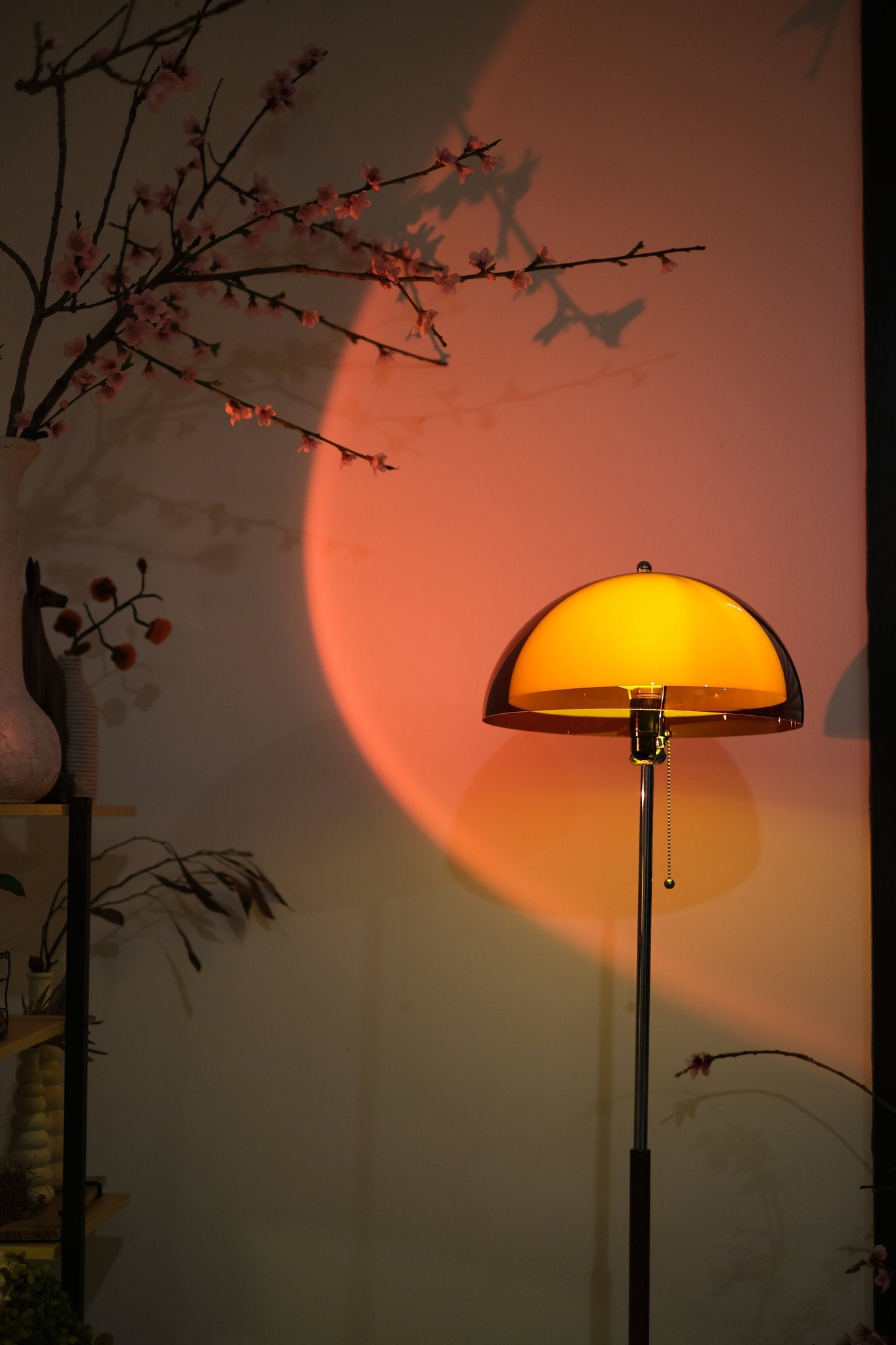
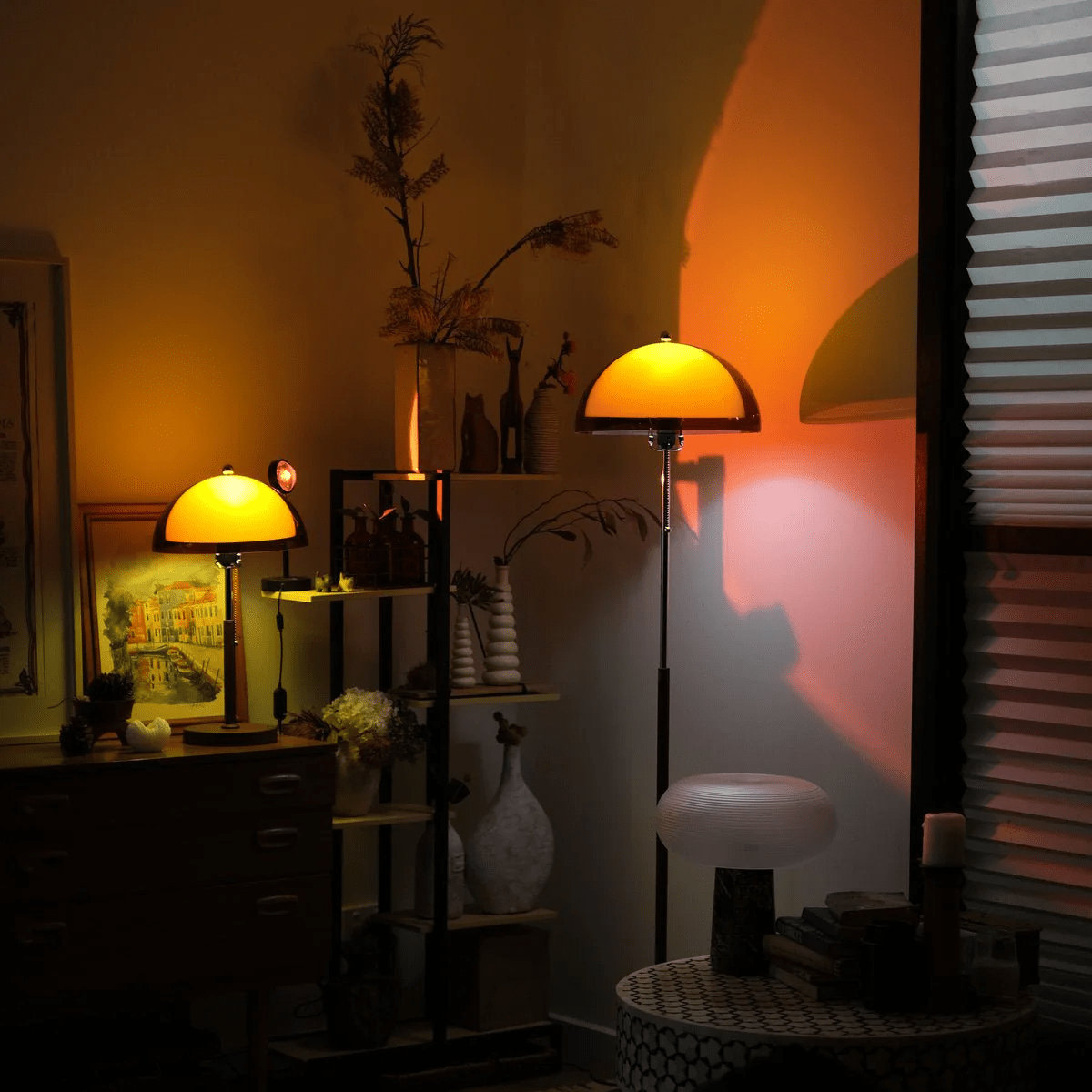
Mushroom lamps are having a huge moment nowadays, and to be honest, I totally understand. They are not only super cute and a bit whimsical, but give off cozy warm light that can level up a bedroom or any other space instantly. But as much as we love that "magical forest" vibe, there is always a concern - is this little lamp going to attract too many bugs? Alright, it is quite fair to have that kind of concern as none of us wants to have a bug party in our room. So, just keep reading, you will find out how to get rid of a bug convention in your mushroom lamps without losing the warm glow. Why Bugs Love Lights Anyway First thing first, you need to understand why bugs tend to be attracted to lights. Obviously it is not because of some funny jokes like “those bugs love the taste in decor.” It’s basically because bugs are counting on natural light sources like the moon and stars to find their way around. So when your floor or table lamps are turned on with their bright light, you know what those bugs will be up to. They can be quite confused with the light of your lamps, and keep circling around it. But here’s the kicker: they're not attracted to all lights equally. Bugs are mostly into two things: That Blueish/UV Glow: This is like a giant neon sign for them. Heat: They're often looking for warm spots to hang out. So, Will My Mushroom Lamp Be a Bug Magnet? Here is quick good news for you. The short answer is an absolute No! The shape of your mushroom lamps will not make bugs think they are in the right place to have a party. Anyway, bugs are not usually attracted to fungi anyway, unless it’s actual fungi growing on something. What does matter, though, is what kind of bulb is inside and how the lamp is designed. And that's where mushroom lamps actually shine (pun intended again!). Do you know what really matters? It is both the bulbs inside and how the lamps are designed. And that's where mushroom lamps actually shine (pun intended again!). 1. The "Cap" Is Shielding You from Bugs Apparently, the most important point of a mushroom lamp is that cool, downward-facing lamp shade. Compared with those "up-light" lamps that easily collect a bowl of bugs(This is the exact place where all the dead flies end up.) The shade of a mushroom lamp plays a role like an umbrella, which covers the bulb and makes it way more difficult for bugs to get into the light source. So, less bug-bulb collisions means less creepy crawlies chilling on your lamp. Score! 2. Warm Tones Are a Bug Turn-Off Plenty of mushroom lamps come with tinted glass, such as those warm oranges, mellow amber, or even thick, milky opal shades. This is not just for looks or decoration(though it is a big help with the vibes and feelings of our houses.) These colors in fact filter out those useless UV light rays that bugs love the most. So, if your mushroom lamp comes with tinted glass, it is actually putting out a “get out of here!” signal with its cozy, warm glow. I am sure most bugs won’t be interested in that spectrum of light. 3. LEDs: The Bug-Free Power-Up Here’s another advantage for your mushroom lamps: most of them use LED bulbs, which are pretty awesome and useful for some reasons: They're Cool: Unlike old-school incandescent bulbs that get super hot (which, remember, bugs also love), LEDs barely produce any heat. So, no heat, no bug party. Less Blue Light: Even if your LED is a bit brighter, many modern LEDs are designed to be more energy-efficient and don't blast out as much of that bug-attracting blue light. So, if you're rocking a mushroom table lamp with both an LED bulb and a nice warm-toned shade, you're pretty much set for a bug-free glow. Don’t know how to choose different types of bulbs? Here is a guide that can definitely help you with that. How to Keep Your Mushroom Lamp (and Your Room) Even More Bug-Free Although your mushroom lamps are already doing a wonderful job getting rid of bugs, here are some extra hacks for you to make sure your houses keep cozy and bug-free: Go for Warm LEDs: Probably your lamps don’t come with LEDs, so you need to swap out any bright, cool white bulbs for warm-toned ($2700K$ or lower) LED bulbs. They can save you more energy and be less appealing to those annoying bugs. Mind Your Windows: Better not put your table lamps right next to an open window or door, especially at night. It is just merely inviting bugs to come over to your house. Keep it Clean: Dust and grime can sometimes attract tiny mites or other little critters. Give your lamp a quick wipe down now and then. Screen It Up: Make sure your window screens are in good shape. It's the simplest barrier! Embrace the Glow So, can you finally get that awesome mushroom lamp without fearing a bug invasion? Absolutely! These trendy lights are actually quite bug-friendly thanks to their design, the types of bulbs they use, and their warm, inviting glow. Go ahead, add that perfect mushroom table lamp to your reading nook, your bedroom, or anywhere that needs a touch of whimsical style. You can enjoy the cozy ambiance without having to constantly shoo away unwanted buzzing guests. Your home decor just got a major upgrade, and your bug problem didn't!
Learn more