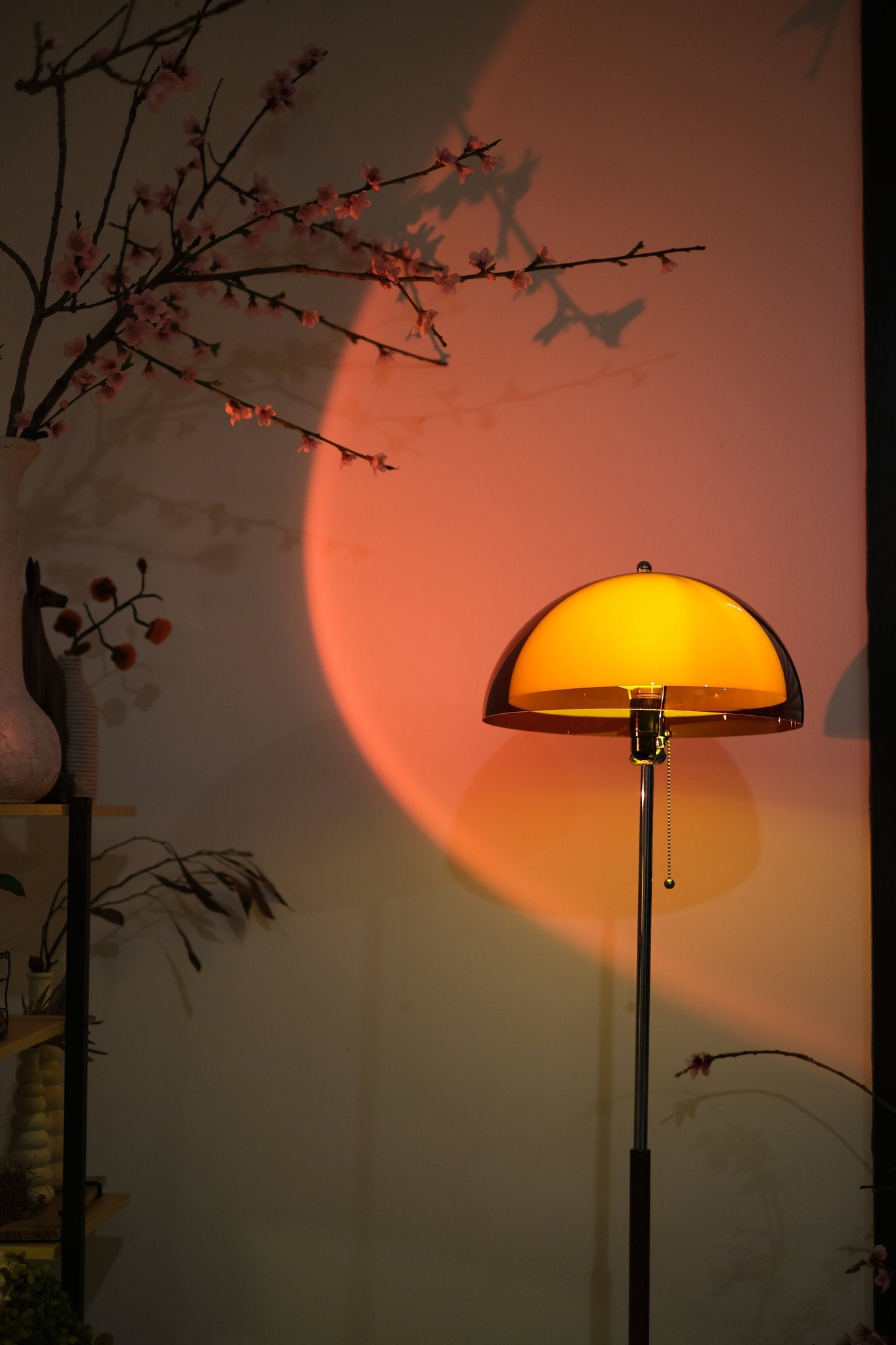

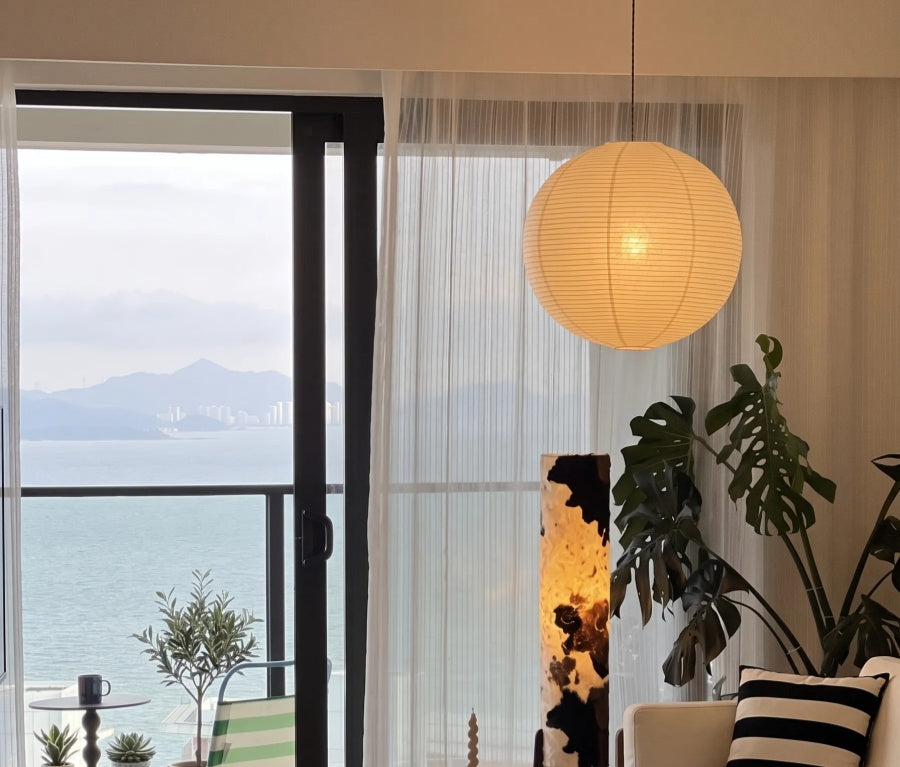
Use a floor lamp when you want softer evening lighting, a cosy reading corner, or extra light in a spot your ceiling light doesn't reach. A ceiling light is usually better for illuminating the room as a whole, especially when you're cleaning, cooking, or moving around.
For most homes, you don't have to choose one or the other. The real difference comes down to how you use the space, the atmosphere you want, and where the light needs to go.
1. Choose a Floor Lamp for Relaxed Evenings

Ever switched on your ceiling light at night and felt like the room suddenly became a little too bright? You're not alone.
A single ceiling fixture can create a fairly uniform wash of light, but it may also leave harsh shadows or make a living room feel less relaxing. A floor lamp gives you another option: light that sits closer to your furniture and your line of sight.
Place one beside the sofa, near an armchair, or in an empty corner. Switch it on while watching television, chatting with friends, or winding down before bed.
The difference can be surprisingly noticeable. Instead of lighting every part of the room equally, you're creating a comfortable pool of light around the areas you actually use.
Floor lamps are particularly useful in Australian living rooms with open layouts, where bright ceiling lights can make a lounge area feel more like a kitchen or workspace.
2. When You Need Better Lighting for Reading

If you regularly read on the sofa, work on a hobby, or knit in the evening, a floor lamp can be more useful than relying on an overhead light.
The problem with ceiling lights is that your head or body may cast a shadow over the book or activity in front of you. A well-positioned floor lamp can direct light towards the task and make the area easier to see.
Which type of floor lamp should you choose?
-
Adjustable floor lamps: Useful when you want to direct light towards a book, craft project, or particular seat.
-
Arc floor lamps: Ideal when you want light to reach over a sofa or coffee table without placing the base directly beside the seating.
-
Floor lamps with reading lights: A practical choice if you need both general ambient light and a more focused beam.
Think about the position of the shade before buying. The bulb shouldn't shine directly into your eyes, and the light should reach your reading area without creating distracting glare.
3. Use a Floor Lamp When You Can't Change the Ceiling Lighting

Not every home gives you the freedom to install new ceiling fixtures.
If you're renting, living in an older property, or trying to avoid electrical work, a floor lamp is an easy way to improve your lighting without changing the existing installation.
You can move it between rooms, reposition it when you rearrange furniture, or take it with you when you move house.
This flexibility is especially handy in rental apartments, where the existing ceiling light might be functional but not particularly attractive.
A floor lamp can also help when a room has only one central ceiling fixture. Rather than relying on that single light source, you can introduce light near the sofa, a desk, or a dark corner.
Just make sure the lamp is stable, the cord doesn't cross a walkway, and the electrical connections are suitable for the intended use.
4. When a Ceiling Light Is Still the Better Choice

Floor lamps have plenty of advantages, but they can't replace ceiling lights in every situation.
If you're cleaning the house, looking for something you've dropped, or moving between rooms, you may need broad, relatively even illumination. A suitable ceiling light can provide that coverage without taking up floor space.
Ceiling lighting is also useful in kitchens, bathrooms, hallways, and other areas where furniture placement or limited floor space makes a floor lamp impractical.
For example, a ceiling light can illuminate the main kitchen area while task lighting helps you see clearly when preparing food. A floor lamp in the adjacent living area can then provide a softer atmosphere after dinner.
If you're comparing different fixed lighting options, Homezee's guide to wall lights versus ceiling lights explores how each option works in modern Australian homes and when one may be more suitable than the other.
5. Floor Lamp vs Ceiling Light: Which Uses Less Energy?

The answer depends on the bulbs, their wattage, and how long you leave them switched on.
A floor lamp fitted with an efficient LED bulb may use less electricity than a ceiling fixture with several higher-wattage bulbs. However, a single LED ceiling light could use less energy than a floor lamp with multiple light sources.
The important thing is to compare the actual power consumption rather than assuming that one type of fixture is always more efficient.
Floor lamps can help you avoid lighting an entire room when you only need light beside the sofa. For example, you might switch off the main ceiling light and use a floor lamp while watching television.
If you're buying a new lamp, check whether the bulb is included, which bulb type it requires, and whether the fitting supports dimming. These details can affect both running costs and everyday convenience.
6. Think About Shade Material and Light Quality

A floor lamp's shade can change how the light feels in your room.
An opaque metal shade generally directs light towards a particular area, making it useful for focused lighting. Fabric and paper shades can soften the appearance of a light source, while glass shades may allow more direct light to pass through, depending on their design and finish.
This matters when you're replacing a bright ceiling light with a floor lamp for evening use.
A lamp with a soft, diffused shade may create a gentler atmosphere, but it won't necessarily provide enough light for detailed tasks. A more directional design may be better for reading or working.
Also, remember that a lamp can look quite different when it's switched on. The shade's colour, the bulb's brightness, and the colour of nearby walls all influence the final effect.
Before choosing a floor lamp, consider both its appearance during the day and the light it produces at night.
7. Can a Floor Lamp Make a Room Look Bigger?

It can help a room feel more open, particularly when the existing ceiling lighting is harsh or the layout feels visually flat.
A tall, slim floor lamp can draw the eye upwards without taking up much visual space. An arc lamp can also introduce height and shape while extending light over furniture.
For smaller living rooms, look for a lamp with a base that fits comfortably beside your sofa or in a corner. A large, heavy design may make a narrow walkway feel cramped.
Think about what the lamp looks like when it's turned off, too. In a compact room, its shape and finish become part of the decor throughout the day.
Avoid placing a floor lamp where it blocks a window, crowds a side table, or interrupts the natural walking route between the living and dining areas.
8. Why the Best Setup Often Uses Both
If your room feels either too bright or too dark, the answer may not be choosing between a floor lamp and a ceiling light. It may be using both for different purposes.
Try this simple arrangement:
-
During the day: Make the most of natural light and use your ceiling light when necessary.
-
When reading: Switch on a floor lamp positioned beside your chair or sofa.
-
In the evening: Turn off the main ceiling light and use one or two lamps to create a softer atmosphere.
-
When entertaining: Combine the ceiling light with floor or table lamps to keep the room comfortable and easy to navigate.
You don't need a lamp in every corner. Start with the areas where you spend the most time, then add another light source only if a space still feels too dark or uncomfortable.
The aim is to make your lighting work around your routine, rather than having to adapt your routine to the lighting.
FAQs
1. Can a floor lamp light up an entire living room?
Yes, depending on the lamp's brightness, shade design, and room size. However, one floor lamp may not distribute light evenly across a large room, so additional light sources may be needed.
2. Is a floor lamp enough light for working from home?
It can be, particularly for occasional tasks, but you'll want sufficient light on your desk and keyboard. A dedicated desk lamp may be more practical for long working sessions.
3. Should I put a floor lamp behind or beside my sofa?
Either position can work. Beside the sofa is convenient for reading, while placing it slightly behind the seating can help spread light without taking up valuable side-table space.
4. Can I use a floor lamp with a smart bulb?
Yes, provided the bulb matches the lamp's socket and electrical specifications. Check compatibility with your smart home system and avoid using smart bulbs with incompatible dimmer switches.
5. Why does my floor lamp look bright but the room still feels dim?
The shade may direct most of its light upwards or downwards rather than across the room. Dark walls, large furniture, and the lamp's position can also affect how bright the space feels.