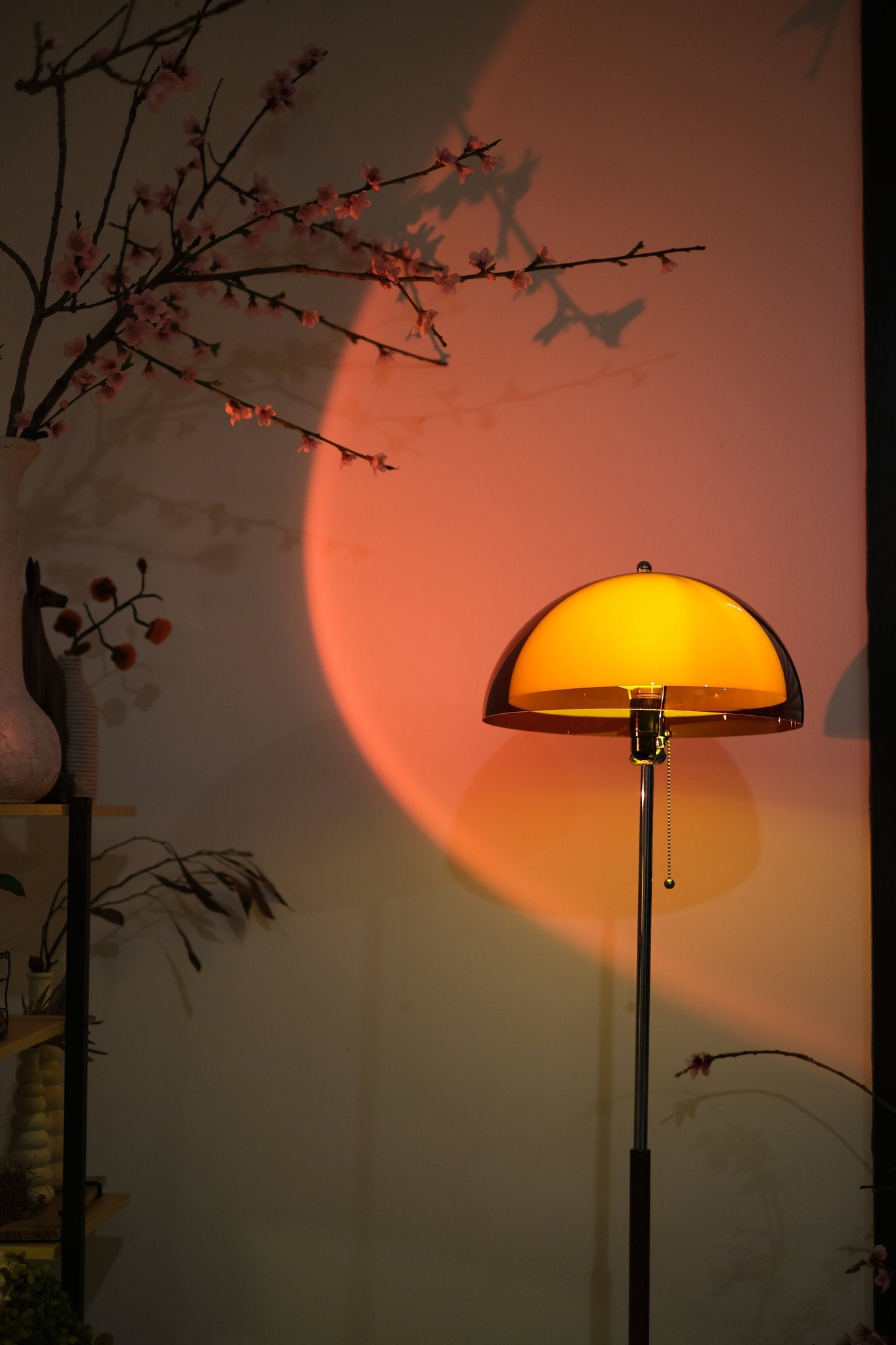

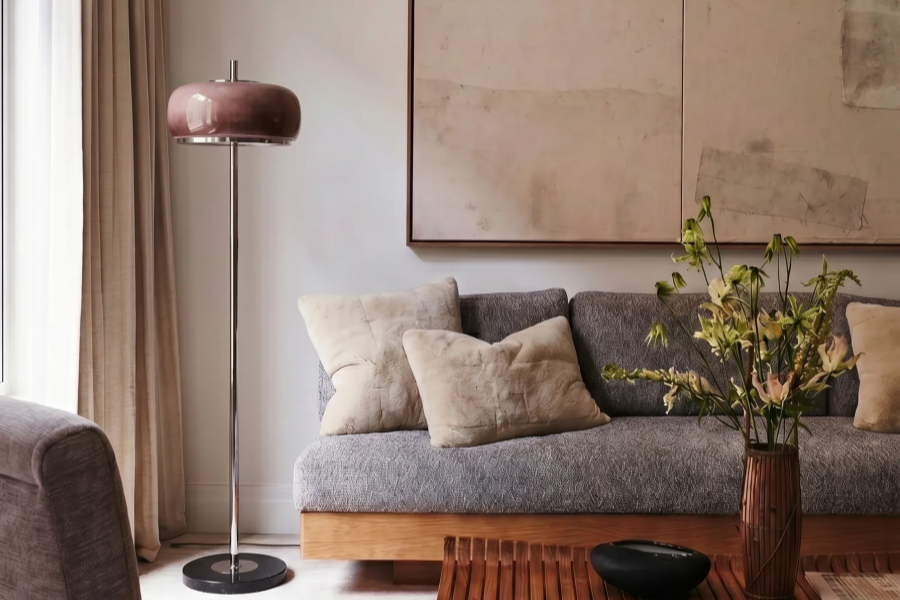
In an open-plan living room, lamps should feel connected without looking like they're lined up in a showroom. A good starting point is to place one main light source in each functional zone, then add smaller lamps where you actually need softer or more focused light.
The trick is less about measuring an exact distance between every lamp and more about creating a comfortable flow of light across the room.
Start by Dividing the Room Into Lighting Zones
Open-plan spaces usually combine several activities: watching TV, relaxing on the sofa, eating, working, or entertaining guests. Instead of treating the whole area as one large room, think of each section as its own lighting zone.
For example, a typical Australian open-plan living area might have:
- A sofa and coffee table
- A TV or media area
- A dining table
- A kitchen island or breakfast bar
You don't necessarily need a lamp in every zone. But each area should have access to an appropriate type of light.
A floor lamp beside the sofa can provide warm evening light, while a pendant above the dining table gives that area a clear visual centre. A small table lamp on a sideboard can then fill in darker corners.
If you're unsure how many lamps your room actually needs, this guide to how many lamps you really need in a living room is a useful place to start. It looks at the balance between ambient, task and accent lighting rather than simply counting fixtures.
How Far Apart Should Floor Lamps Be?

There isn't one universal distance that works for every open-plan room.
A better approach is to avoid placing two lamps so close together that they perform exactly the same job. If a floor lamp is already lighting the reading corner beside your sofa, another floor lamp a metre away may not add much.
Instead, use lamps to spread light into areas that would otherwise feel dark.
For a larger living room, you might place one floor lamp beside the sofa and another near an armchair or empty corner. The distance between them could be several metres, depending on the room layout.
Look at the room after sunset. If you can switch off the ceiling lights and still move comfortably through the space, you're probably creating a useful spread of light rather than simply adding more fixtures.
Keep Lamps Connected to the Furniture

One of the easiest mistakes in an open-plan living room is positioning lamps according to the walls instead of the furniture.
Your lighting should follow how you use the room.
A floor lamp usually works best beside a sofa, armchair or reading spot. A table lamp makes more sense on a console, side table or cabinet. A pendant should normally relate to the dining table, kitchen island or another clearly defined surface.
This creates visual connections between the different zones.
For example, imagine a large room with a sofa on one side and a dining table several metres away. A floor lamp next to the sofa and a pendant centred over the dining table can make the two areas feel separate while still belonging to the same space.
Don't Forget the Height of Your Lamps

Spacing isn't only about horizontal distance. Lamp height can dramatically change how an open-plan room feels.
A tall floor lamp can help fill vertical space, particularly in a room with high ceilings. A low table lamp creates a more intimate pool of light and works nicely beside sofas and armchairs.
Pendant lights need even more care. If they're hung too high, the light can feel disconnected from the furniture underneath. Too low, and they can interfere with sightlines across the room.
Think about what you see from the sofa, dining chair and kitchen bench. A lamp should add warmth without becoming something you constantly have to look around.
Mix Different Types of Light

Using several identical lamps isn't always the best way to illuminate a large room.
Open-plan spaces generally feel more comfortable when different light sources work together. Try combining:
- Floor lamps for broader or directional light
- Table lamps for low-level ambient lighting
- Pendant lights to define dining or kitchen areas
- Wall lights to brighten vertical surfaces
- Ceiling lights for general illumination
This layered approach also means you don't have to turn every light on at once.
On a quiet evening, you might only use the floor lamp beside the sofa and a small table lamp. When you're hosting friends, you can bring more of the room's lighting into play.
Consider How the Lamps Look When They're Off

Here's something that's easy to overlook when shopping for lighting: you see your lamps turned off for much of the day.
In an open-plan room, several lamps can become part of the overall interior design. Their shapes, finishes and shade materials need to work together even when they aren't producing light.
A large paper or fabric shade, for example, can soften the look of a room, while glass or metal can create a more defined visual presence.
This matters even more when your living room connects directly to a dining area or kitchen. You don't want every lamp competing for attention.
A simple way to avoid this is to vary the function while keeping some visual relationship between the fixtures. They don't need to match exactly.
Leave Enough Space Around the Lamps

A lamp can be correctly positioned and still feel awkward if the surrounding furniture is too crowded.
Check the space around a floor lamp before buying it. Make sure people can walk past without bumping into the base, especially if your open-plan room connects the kitchen, dining area and living room.
For table lamps, consider the depth of the table and the position of nearby seating. A very large shade on a narrow side table can make the whole setup feel cramped.
Also think about cleaning. Lamps in open living spaces collect dust just like other furniture, and textured or fabric shades may need more frequent attention than smooth surfaces.
Use Warm Light for Evening Comfort

Once the basic spacing is right, the quality of the light becomes just as important as the position of the lamps.
For relaxing areas, warmer lighting generally creates a softer evening atmosphere than very cool, bright light. Dimmers or adjustable bulbs can also be useful because the amount of light you want at 6 pm may be very different from what you want later at night.
And don't judge a lamp only from its product photo.
The shade material, bulb and surrounding wall colours can all change how it looks once switched on. A fixture that looks fairly simple during the day can produce a surprisingly soft glow at night.
A Simple Layout to Try
If you're starting from scratch, try this basic arrangement:
Living zone: Place a floor lamp beside the main sofa or reading chair.
Dining zone: Centre a pendant over the dining table rather than positioning it according to the room's overall ceiling.
Between zones: Use a small table lamp on a console or sideboard if there is a noticeably dark transition area.
Kitchen zone: Keep brighter functional lighting around work surfaces, while allowing the living and dining lights to create a softer atmosphere when cooking is finished.
Then turn on only one or two lamps at a time and see where the room still feels flat or too dark.
That's usually a much better way to adjust spacing than following a rigid measurement.
The Bottom Line

Spacing lamps in an open-plan living room is really about where light is needed, how people move through the space, and how the fixtures relate to your furniture.
Start with your main activity areas, give each zone an appropriate light source, and avoid putting lamps close together simply because an empty corner is available. Mix heights and lamp types, keep walking paths clear, and pay attention to how the fixtures look both on and off.
The result should feel relaxed rather than perfectly symmetrical—which is usually what makes an open-plan room feel like home.
FAQs
1. Can I put two floor lamps in the same living room?
Yes. Two floor lamps can work well if they serve different areas, such as a sofa and a reading chair. They don't need to be placed the same distance apart.
2. Should lamps in an open-plan room match?
No. Matching lamps can create a coordinated look, but mixing different shapes and materials can make the room feel more natural. Try to keep some connection through colour, finish or overall style.
3. Where should a floor lamp go if the sofa is in the middle of the room?
Place it beside or slightly behind the sofa where it won't interfere with movement. An arc floor lamp can also work when you want light to extend over a coffee table without putting the base directly beside the seating.
4. Should a table lamp be higher than the sofa?
Not necessarily. What matters more is where the light falls and how the lamp looks beside the furniture. A very tall lamp on a low side table can feel visually unbalanced.
5. Can I use the same bulb colour in every lamp?
You can, and keeping the colour temperature consistent is often an easy way to make different lighting zones feel connected. If you mix noticeably different tones, the contrast can sometimes feel distracting.