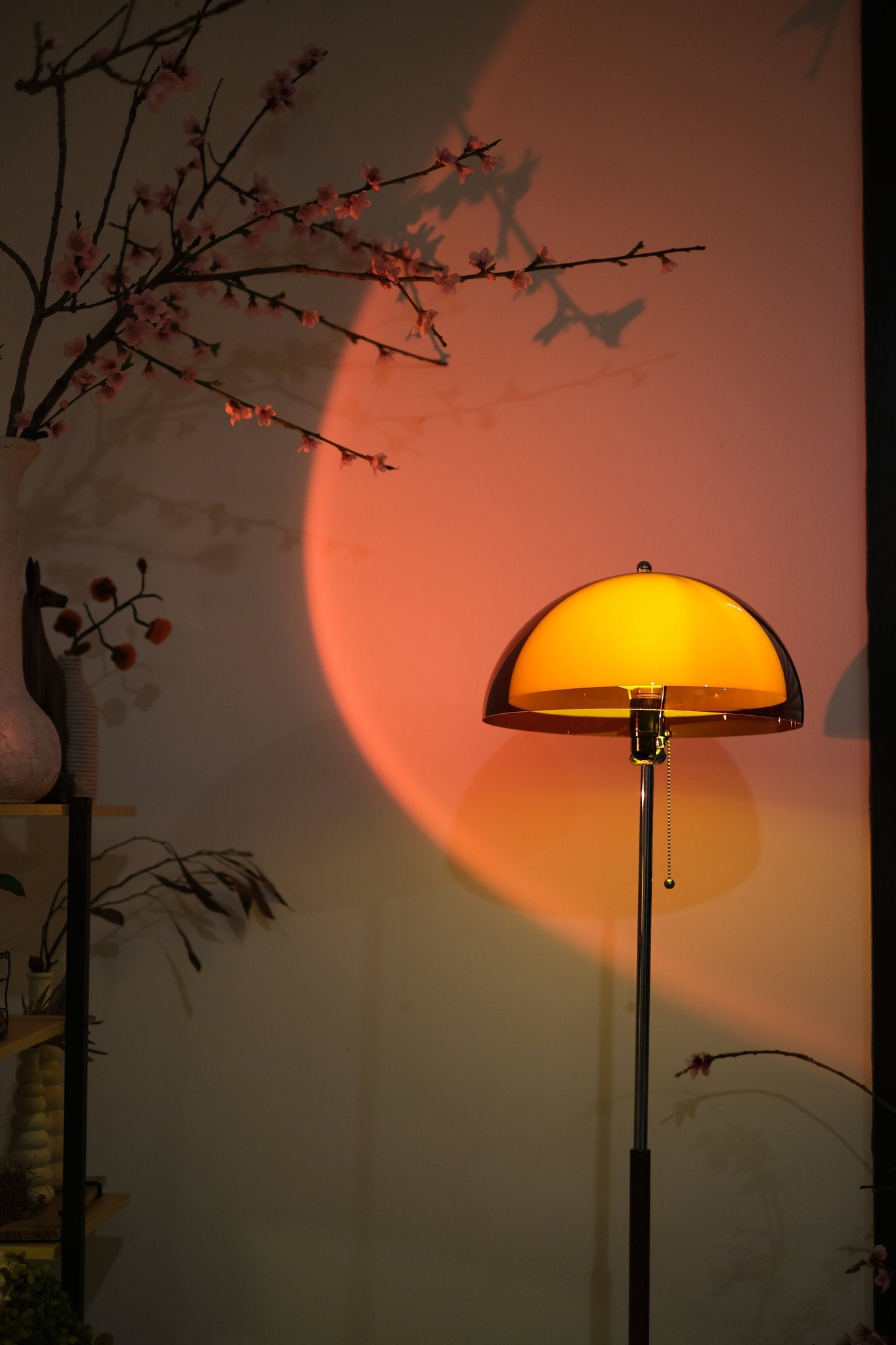

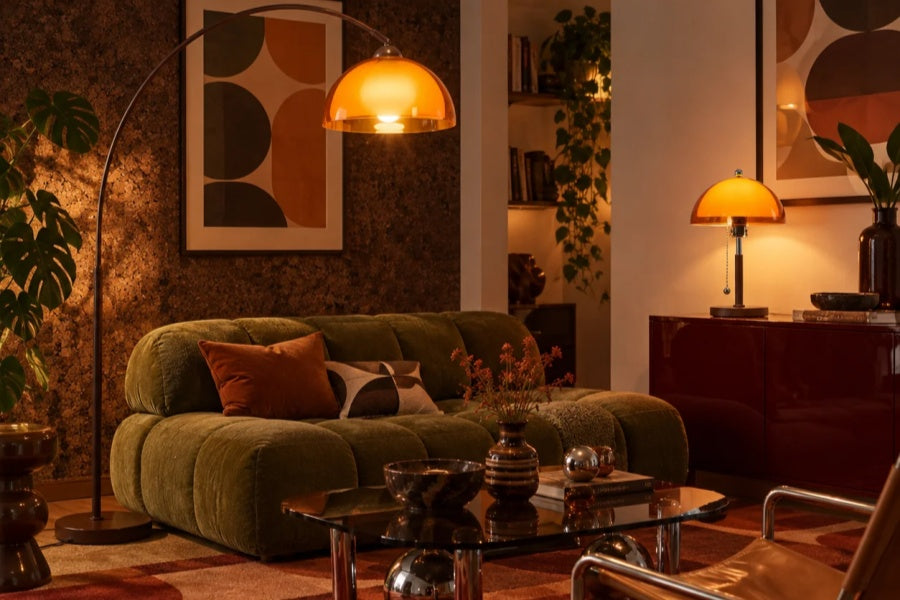
If your living room feels a little dark in the evening, your first thought might be, “Do I need a brighter bulb?”
Sometimes, the answer is actually simpler: you may need another lamp.
A living room rarely feels its best with just one light source. A ceiling light might brighten the whole space, but it doesn't necessarily make the room feel warm or comfortable. Adding a floor lamp, table lamp, or even a smaller accent light can completely change how the room feels.
So, how many lamps do you really need in a living room?
For most homes, 2–4 light sources is a good starting point. But the right number depends on your room size, furniture layout, activities, and the atmosphere you want to create.
Let's break it down.
Start With Your Living Room's Main Light

Before buying more lamps, look at what you already have.
Most living rooms have some kind of main light, such as a ceiling fixture, pendant light, or recessed lighting. This provides general illumination, helping you see the whole room.
But overhead lighting alone can sometimes make a living room feel flat.
Think about what happens in the evening. You switch on the ceiling light and suddenly the entire room is bright from above. It's practical, but maybe not particularly cosy.
This is where lamps become useful.
Instead of expecting one light to do everything, you can use several smaller sources at different heights.
That's the basic idea behind layered lighting.
So, How Many Lamps Does a Living Room Need?

There's no magic number, but here's a useful starting point:
- Small living room: 2–3 light sources
- Medium living room: 3–4 light sources
- Large or open-plan living room: 4–6+ light sources
Remember that "light sources" doesn't necessarily mean six lamps.
A room could have one ceiling light, one floor lamp, two table lamps, and natural daylight during the day.
The goal isn't to fill the room with lamps. It's to make sure different areas have enough light for different moments.
One Floor Lamp Can Make a Big Difference

If you only want to add one lamp to your living room, a floor lamp is often a practical place to start.
Why?
Because it can fill a dark corner, sit beside a sofa, provide reading light, and add another visual layer without taking up much table space.
A floor lamp beside a sofa or armchair is particularly useful if you enjoy reading, scrolling on your phone, knitting, or simply relaxing there in the evening.
You can also use an arc floor lamp to extend light over a sofa or coffee table without needing a side table underneath it.
The important thing is placement.
A lamp hidden behind a large piece of furniture may not contribute much to the room. A lamp positioned near a seating area, empty corner, or wall can have a much bigger impact.
Add a Table Lamp for a Softer, More Local Glow

Table lamps are great when you want lighting that feels more intimate.
Try placing one on:
- A side table beside the sofa
- A console table
- A TV unit
- A small cabinet
- A bookshelf
- A sideboard
The advantage of a table lamp is that it creates a smaller pool of light.
Instead of lighting the entire room, it makes one particular area feel inviting.
For example, imagine your living room at 9 p.m. The ceiling light is switched off. There's a warm table lamp beside the sofa and a floor lamp in the corner.
Suddenly, the room feels much more relaxed.
That's often the difference between simply having enough light and having lighting that actually creates an atmosphere.
Do You Need Two Table Lamps?

Not necessarily.
Two matching table lamps can look great, especially if you have a symmetrical console or a large TV unit.
But don't feel like everything has to match.
You could have a floor lamp on one side of the sofa and a table lamp on the other. Or place a table lamp on a console while using a pendant or ceiling light as the main source.
What matters more is balance.
If all your light comes from one side of the room, the other side can feel noticeably darker.
Try looking at your living room after sunset and ask:
Where does my eye notice darkness?
That darker area may be exactly where another lamp belongs.
Don't Forget About the Corner

Living room corners are often wasted lighting opportunities.
You might have a beautiful corner with a plant, armchair, bookshelf, or artwork, but once the sun goes down, it disappears into darkness.
A floor lamp can bring that area back into the room.
You don't necessarily need a very bright lamp either. A soft glow directed toward the wall can create a subtle background light.
This can make the entire room feel more layered without making it feel overly bright.
Your Lamps Don't All Need to Be the Same
This is where many people get stuck.
They think:
“If I buy three lamps, they all need to match.”
Not at all.
You can mix different lamp styles while keeping the overall look connected.
For example:
Modern living room:
A simple floor lamp + sculptural table lamp + clean pendant.
Cosy living room:
A fabric or artificial silk lamp + warm table lamp + soft floor lamp.
Minimalist living room:
One statement floor lamp + one understated table lamp.
The trick is to keep something consistent, such as the material, colour, shape, or bulb colour temperature.
The Bulb Matters More Than You Might Think

Here's something people often overlook when deciding how many lamps they need.
The number of lamps isn't the only thing that changes how bright or cosy your living room feels.
The bulb and lampshade matter too.
A lamp can look completely different once you turn it on. The bulb's colour temperature, brightness, shape, and the shade material can all affect the final appearance. Glass, fabric, paper, and other materials can interact with light in different ways.
So before deciding that your room needs another five lamps, try experimenting with the bulbs you already have.
A warm-white bulb can create a much softer evening atmosphere than a cool-white bulb.
If you're curious about why the same lamp can look so different when it's switched on, Homezee's guide on Why Does a Lamp Look Different When It's Turned On? Bulbs, Glass Shades & More Explained goes into the details.
Think About What You Actually Do in Your Living Room
This is probably the easiest way to work out how many lamps you need.
Ask yourself what happens in the room after dark.
If you mainly watch TV
You may want softer background lighting rather than a bright lamp pointing directly at the screen.
A floor lamp behind or beside the sofa can work well.
If you read
Add a dedicated reading lamp near your favourite chair or sofa.
The light should be positioned so you can see your book without shining directly into your eyes.
If you entertain guests
Think about atmosphere.
You might want several lower-level lamps rather than one extremely bright ceiling light.
If your living room is also a workspace
You'll probably need a more focused task light in addition to your ambient lighting.
A Simple 3-Lamp Living Room Setup
Not sure where to start?
Try this:
Lamp 1: Floor lamp beside the sofa
Provides practical light for reading and relaxing.
Lamp 2: Table lamp on a side table or console
Adds a warm, local glow.
Lamp 3: Accent or decorative lamp
Lights a darker corner, shelf, or feature area.
Keep your main ceiling light available when you need brighter general illumination.
That's already enough to create several different lighting moods without filling your living room with lamps.
What If Your Living Room Is Small?
Small rooms don't automatically need fewer lamps.
In fact, several smaller lamps can sometimes work better than one large, powerful light.
You can use a slim floor lamp in a corner and a compact table lamp on a side table.
The key is choosing the right scale.
A huge floor lamp in a tiny room can make the space feel crowded. A slimmer design can provide the same lighting function while keeping the room visually open.
What If Your Living Room Is Large?
Large living rooms usually benefit from more lighting layers.
If you have a large sofa, several seating areas, or an open-plan space, one lamp may simply disappear.
Try creating small lighting zones.
For example:
- Floor lamp near the main sofa
- Table lamp near an armchair
- Table lamp on a console
- Pendant or ceiling light in the centre
- Accent light near artwork or a plant
You don't have to switch everything on at once.
That's the beauty of having multiple lamps.
The Bottom Line
So, how many lamps do you really need in a living room?
For most homes, 2–4 well-placed light sources is a great starting point.
But don't count lamps just for the sake of counting them.
Think about where you sit, what you do, where the room feels dark, and what kind of atmosphere you want in the evening.
One floor lamp might solve a dark reading corner. A table lamp might make your sofa feel much cosier. Another small light might bring an otherwise forgotten corner back to life.
Good living room lighting isn't about making everything equally bright.
It's about giving the room different levels of light for different moments.
And sometimes, the best lighting setup is simply the one that makes you want to stay on the sofa a little longer.
FAQs
1. Do I need a floor lamp and a table lamp?
Not necessarily, but using both can create more lighting layers. A floor lamp is useful for larger areas, while a table lamp creates a more concentrated and intimate glow.
2. Where should I put a floor lamp in my living room?
Beside a sofa, reading chair, or in a darker corner are common choices. Make sure the lamp provides useful light without blocking walkways.
3. Can too many lamps make a living room look cluttered?
Yes, if they're poorly placed or oversized. Focus on useful lighting zones rather than simply adding more fixtures.
4. Should I leave my ceiling light on with my lamps?
Not always. For a cosy evening atmosphere, you may prefer turning off the main ceiling light and using several smaller lamps instead.
5. Why does the same bulb look different in different lamps?
The lampshade material, shape, bulb position, surrounding surfaces, and other light sources can all change how the light is perceived.