
If you're choosing a new lamp for your home, you might find yourself stuck between two beautiful options: artificial silk light and paper lighting.
Both can create that soft, cosy glow that makes a room feel instantly more inviting. Both can look beautiful in a relaxed living room or bedroom. And both can work especially well when you want your lighting to feel like part of the décor rather than just something that brightens the room.
So, which one looks better at home?
Honestly, it comes down to the mood you're trying to create.
Artificial silk lighting brings a more artistic, refined and textured feeling, while paper lighting has a wonderfully light, natural and relaxed character.
Let's take a closer look.
What Is Artificial Silk Lighting?

Artificial silk lighting uses a silk-like textile material as part of the lamp shade or lighting design.
The appeal is easy to understand once you see one switched on.
The material catches and diffuses the light, creating a soft visual glow while adding texture to the lamp itself. Rather than looking like a simple functional shade, artificial silk can give a light a more decorative and artistic personality.
This makes it particularly interesting for people who want their lighting to become part of their interior design.
Think of it as the difference between simply having a lamp in the room and having a lamp that actually contributes to the room's character.
Artificial silk lighting can work beautifully with contemporary, minimalist, elegant and cosy interiors.
What Makes Paper Lighting Special?

Paper lighting has a completely different personality.
Paper shades are loved for their lightweight appearance and soft, diffused illumination.
When the light passes through the shade, it creates a gentle glow that can make a space feel calm and comfortable.
That's one reason paper lamps have become such a popular choice for bedrooms, living rooms, reading corners and relaxed dining spaces.
Paper lighting doesn't need to be complicated.
Sometimes its simple appearance is exactly what makes it work.
If you're interested in choosing between different shade materials for your home, you can also read Homezee's guide, Glass, Acrylic, Rice Paper or Fabric: How to Choose the Right Lamp Shade Material?.
It explains how different materials can change the look and atmosphere of a room.
Artificial Silk vs Paper: How Do They Look Different?
This is probably the first thing you'll notice.
Artificial silk tends to have a richer, more textured appearance. Depending on the design, the surface can create subtle visual movement even when the lamp isn't switched on.
Once illuminated, the texture becomes even more noticeable.
Paper lighting, meanwhile, tends to have a lighter and more understated appearance.
It can feel airy, natural and effortlessly relaxed.
So if your interior is all about:
Warmth + texture + artistic details, artificial silk could be a beautiful choice.
If your interior is more about:
Simplicity + softness + natural minimalism, paper lighting may fit beautifully.
Neither style is better.
They're simply telling different stories.
Which One Creates Softer Light?

Both artificial silk and paper lighting can create beautifully diffused illumination.
The exact effect depends on the material, construction, colour, thickness and overall lamp design.
Artificial silk can create a gentle glow while allowing the texture of the material to become part of the visual experience.
Paper shades are also well known for their soft, diffused appearance.
This makes both materials particularly suitable for ambient lighting.
And here's a little trick that makes a surprisingly big difference:
Don't forget the bulb.
A warm-white bulb can make either material feel much cosier in the evening.
A cooler, brighter bulb will create a different atmosphere.
The shade and bulb work together, so it's worth considering both when choosing your lighting.
Which One Feels More Artistic?

If you're specifically looking for lighting that feels like a piece of décor, artificial silk lighting has a lot to offer.
The textile surface can add depth and visual interest to the fixture.
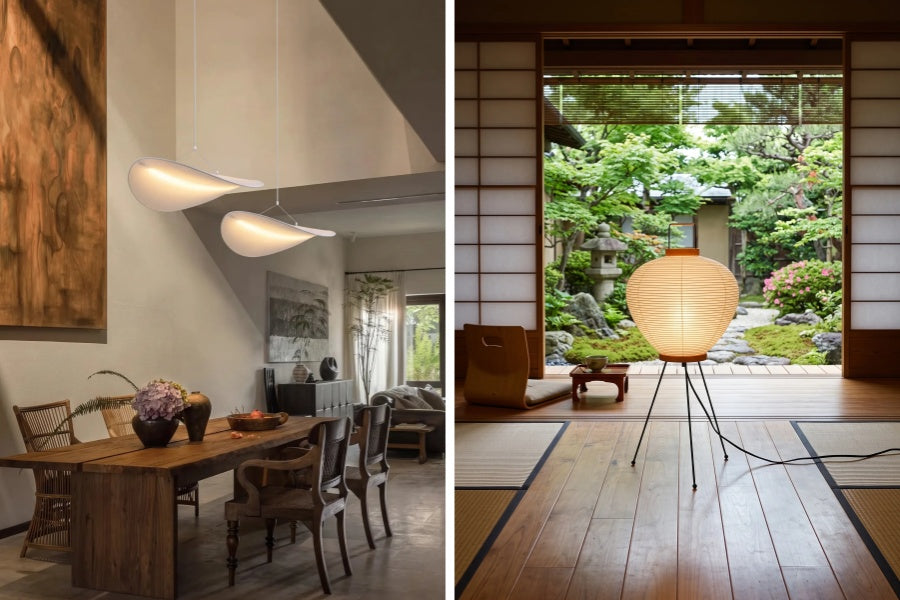
It can become a subtle focal point, particularly when used as a pendant light over a dining table, a statement light in a living room, or a decorative lamp in a bedroom.
Paper lighting can absolutely be artistic too.
Its beauty often comes from simplicity.
A beautifully shaped paper shade can look almost sculptural, particularly when combined with clean furniture and a neutral interior.
So the question isn't really whether one is artistic and the other isn't.
It's what kind of artistic feeling you prefer.
Artificial Silk Lighting for a Cosy Living Room

Imagine a living room in the evening.
The overhead lights are off. There's a soft glow coming from a pendant or floor lamp. The sofa is comfortable, the room is quiet, and the lighting isn't trying too hard.
That's where artificial silk lighting can really shine.
The material adds warmth and texture while the diffused light creates a comfortable atmosphere.
It can work particularly well with:
- Neutral sofas
- Wooden furniture
- Soft textiles
- Warm metallic accents
- Minimalist interiors
- Contemporary décor
The result can feel polished without feeling overly formal.
Paper Lighting for a Relaxed Interior

Paper lighting has a slightly different personality.
It works beautifully when you want a room to feel light, calm and uncomplicated.
Think of a bedroom with neutral bedding, timber furniture and a softly glowing paper pendant.
Or a reading corner with a paper floor lamp beside a comfortable chair.
Or a living room where a paper pendant becomes a soft visual centrepiece.
The effect is relaxed rather than dramatic.
And that's exactly why paper lighting works so well in homes where comfort is the priority.
Which Is Better for a Bedroom?
Both can work beautifully in a bedroom.
The key is the atmosphere you're after.
If you want your bedroom to feel warm, refined and slightly luxurious, artificial silk lighting can be a lovely choice.
If you prefer a simple, natural and relaxed bedroom, paper lighting may be more your style.
You can also think about the size of the room.
A large pendant can become a statement feature, while a smaller bedside lamp can provide a softer and more intimate glow.
In either case, warm lighting is usually a good starting point for evening use.
Which One Works Better With Minimalist Interiors?
This is another area where both can work.
Paper lighting naturally suits minimalist interiors because of its simple visual language.
But artificial silk can also work incredibly well in minimalist spaces.
In fact, placing a textured artificial silk lamp in an otherwise simple room can create a beautiful contrast.
Imagine a neutral room with white walls, simple furniture and very little decoration.
Now add one carefully chosen textured pendant.
Suddenly, the lamp becomes the detail that gives the room personality.
Sometimes minimalism isn't about having fewer beautiful things.
It's about choosing a few things that really matter.
What About Japandi and Natural Interiors?
Paper lighting is an obvious match for Japandi-inspired spaces, especially when paired with wood, neutral colours and simple furniture.
Artificial silk can also work beautifully here, particularly when the design has a soft shape and subtle texture.
Both materials can complement natural textures without making the room feel overly decorated.
If your home includes timber, linen, stone, ceramics and other tactile materials, either type of lighting can become part of the overall material story.
Which One Makes a Better Statement Light?
If your goal is to make the lamp a noticeable design feature, artificial silk can be a particularly interesting option.
The texture of the material gives the fixture another visual layer.
It doesn't have to be huge or dramatic.
Sometimes a beautifully designed artificial silk pendant above a dining table is enough to catch the eye.
Paper lighting can also make a statement, particularly when you choose an unusual shape or large sculptural design.
The difference is more about personality.
Artificial silk tends to bring texture and sophistication.
Paper tends to bring simplicity and softness.
What About Everyday Maintenance?
Whichever material you choose, follow the care instructions provided with the specific lamp.
For paper shades, gentle dusting and careful handling are generally important because the material is lightweight and delicate.
Artificial silk lighting should also be treated with care to protect its textile surface and appearance.
Avoid using random cleaning products simply because they're nearby.
A lamp shade isn't the same as a kitchen countertop.
When you're unsure, check the manufacturer's instructions first.
And if you're comparing lamp shade materials more generally, it's useful to think about maintenance alongside appearance. A beautiful lamp is something you'll want to enjoy for years, so choosing a material that fits your everyday lifestyle makes sense.
Which One Should You Choose?
Let's make the decision easier.
Choose Artificial Silk Lighting If You Want:
- A more textured appearance
- An artistic decorative element
- A refined and sophisticated atmosphere
- Soft, visually rich lighting
- A statement piece for your interior
- Something that feels a little different from conventional lighting
Choose Paper Lighting If You Want:
- A simple and natural look
- Soft diffused illumination
- A relaxed atmosphere
- Lightweight visual design
- A minimalist or Japandi-inspired feeling
- A cosy lamp that blends easily into the room
And there's nothing wrong with loving both.
In fact, you can use both materials in the same home.
An artificial silk pendant could become the centrepiece of your dining room, while a paper floor lamp creates a softer glow in your reading corner.
Different rooms can have different personalities.
Don't Forget the Shape of the Lamp
Here's something people sometimes overlook when comparing materials.
Shape matters. A lot.
A large artificial silk pendant can create a completely different effect from a small artificial silk table lamp.
The same is true for paper lighting.
A round paper pendant can feel soft and organic, while a more structured paper shade can look architectural and modern.
So don't make your decision based on material alone.
Consider:
Material + shape + size + bulb + room + existing décor.
That's the combination that determines how the final lamp actually looks.
Final Thoughts
So, artificial silk light vs paper lighting—which looks better at home?
If you want texture, artistic character and a refined decorative feeling, artificial silk lighting can be a beautiful choice.
If you love simple shapes, soft illumination and a relaxed natural atmosphere, paper lighting is hard to resist.
But there's no need to think of this as a competition.
Your home isn't a showroom where everything needs to match perfectly.
A little contrast can make a space feel much more personal.
Choose the material that makes you want to switch the light on in the evening.
Because that's really what good home lighting is about.
Not just brightness.
Not just decoration.
It's about creating that feeling of “I actually want to be here.”
FAQs
1. Is artificial silk lighting better than paper lighting?
Neither is universally better. Artificial silk lighting offers texture and an artistic decorative feel, while paper lighting creates a simple, soft and relaxed atmosphere. The right choice depends on your interior style.
2. Does artificial silk lighting create soft light?
Yes. Artificial silk shades can diffuse light and create a gentle glow. The final effect also depends on the bulb, shade construction and colour.
3. Which looks more luxurious, artificial silk or paper?
Artificial silk lighting can create a more refined and textured appearance, making it a great choice when you want your lamp to feel like a decorative feature.
4. Can artificial silk lights work in minimalist homes?
Absolutely. A textured artificial silk lamp can add visual interest to a minimalist room without requiring lots of additional decoration.
5. Is paper lighting suitable for modern interiors?
Yes. Paper lighting can work beautifully with modern, minimalist, Japandi and contemporary interiors, particularly when paired with simple furniture and neutral colours.