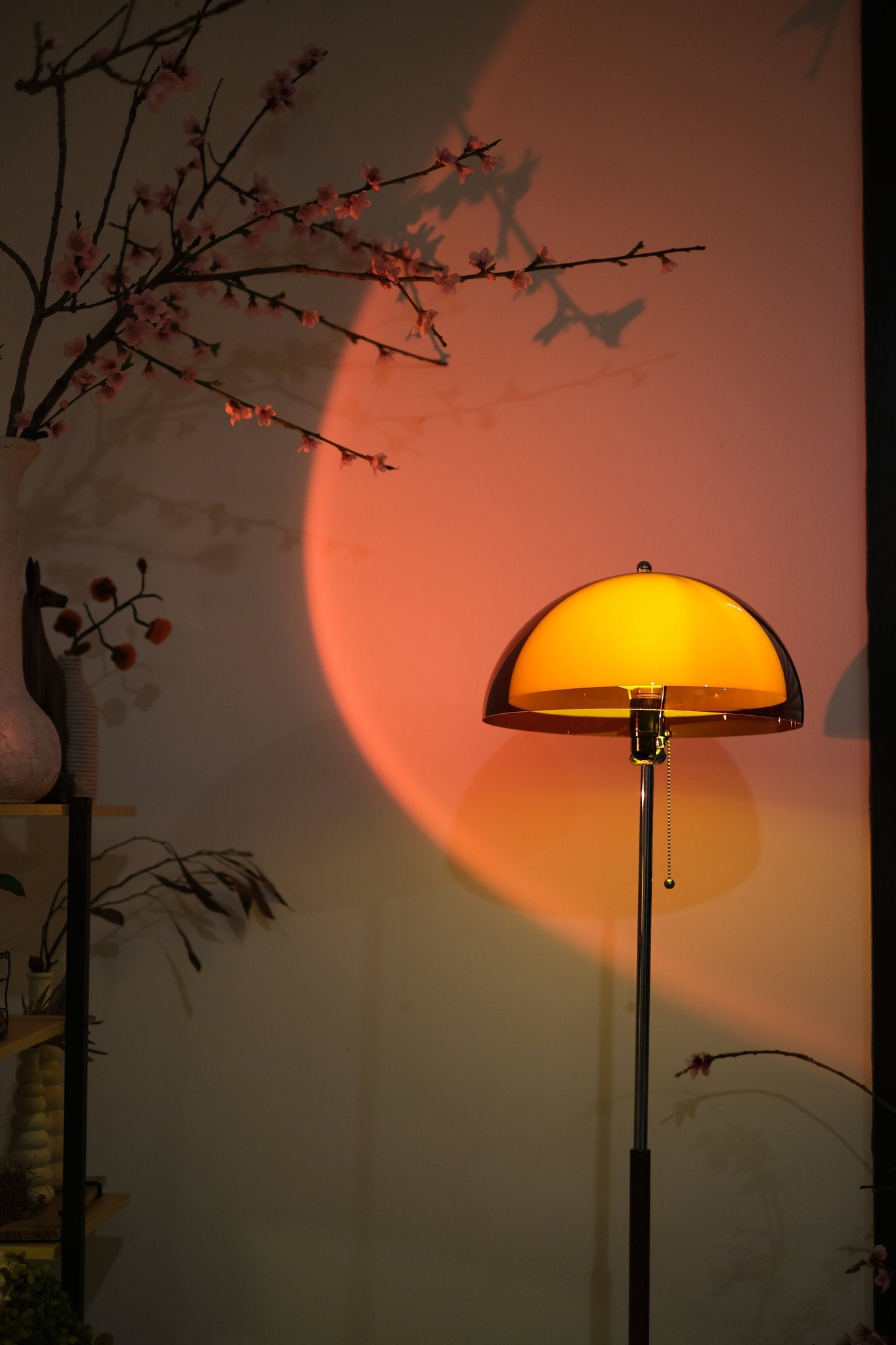

You’ve bought the perfect floor lamp. Warm light, beautiful shade, solid base. You plug it in, turn it on… and something still feels off. The light is either glaring in your eyes or hiding in a corner doing nothing useful.
Here’s the thing: a great floor lamp isn’t just about the lamp itself. It’s about where you put it.
Placement is everything. Move a lamp 30 centimetres to the left, and suddenly a whole room feels different. Get it right, and your space becomes softer, more inviting, and genuinely relaxing – exactly what an Australian home should feel like in 2026.
Let’s talk about where to put your floor lamps for maximum cosy factor.
Next to the Sofa

This is the most common mistake. People tuck their floor lamp behind the sofa, where the light hits the back of the furniture and disappears into nowhere. Useless.
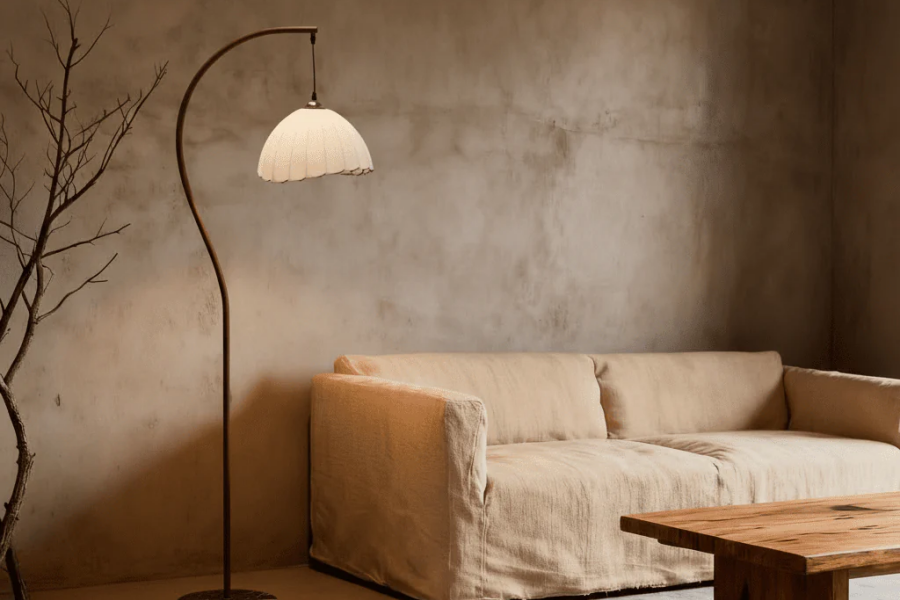
The fix: Place your lamp right next to the arm of the sofa, slightly forward so the shade is beside – not behind – the person sitting there. The light should land on your shoulder or lap, not over the back of the couch.
Why it works: You get task light for reading, plus ambient glow that softens the whole seating area. It feels like a cosy little bubble just for you.
Pro tip: Look for a floor lamp with an adjustable arm so you can angle the light exactly where you need it. Browse our collection of floor lamps for living room to find options that work beautifully beside a sofa.
In a Dark Corner

Dark corners suck energy out of a room. But just dumping a lamp in a corner and pointing it straight up or down won’t fix the problem.
The fix: Place your floor lamp in the corner, then angle the shade so light spills diagonally across the room – not just up the wall. If the shade is fixed, choose a lamp that directs light outward rather than straight down.
Why it works: Light that travels across a room creates depth. It pulls your eye from the dark corner into the rest of the space, making the whole room feel bigger and warmer.
Try this: Use a torchiere-style floor lamp (shade pointing up) to bounce light off the ceiling. The reflected soft lighting fills the corner without harsh glare.
Behind an Armchair

Here’s a designer trick most people don’t know.
The fix: Place a floor lamp directly behind an armchair, with the shade rising above the backrest. The light should be aimed upward or slightly forward, creating a halo of glow around the chair.
Why it works: Backlighting reduces contrast between the bright lamp and the dark room. It’s incredibly flattering and makes any seating area feel like a high-end hotel lounge.
What you need: A tall floor lamp (at least 150cm) with a shade that doesn’t glare sideways. Fabric or linen shades work best for this trick.
Near a Bookshelf or Plant

Your floor lamp isn’t just for you – it’s also for showing off the things you love.
The fix: Position your lamp so the light grazes across a bookshelf, a large indoor plant, or a piece of art on the wall. The shade should be at a height where the light hits the object, not above or below it.
Why it works: Accent lighting turns everyday objects into features. A fiddle leaf fig looks twice as dramatic with warm light washing over its leaves. A bookshelf becomes a gallery.
Pro tip: Use a floor lamp with a swivel head so you can adjust the angle whenever you rearrange your shelves. Explore our range of adjustable floor lamps to find one that lets you play with the light direction.
Beside Your Bed

Tiny bedside table lamps are cute, but they often aren’t tall enough to cast light where you need it when you’re sitting up in bed.
The fix: Swap your table lamp for a tall floor lamp placed beside the bed. Choose one with a shade that sits at or just above seated eye level (around 120‑140cm from the floor).
Why it works: A floor lamp frees up nightstand space for books, phones, and glasses. Plus, the higher light source creates a softer, more even glow for reading.
Pro tip: Look for a floor lamp with a built‑in shelf or USB port for extra bedside function. Or pair it with bedroom wall lights for a layered look – our guide on how to choose bedside table lamps explains the trade‑offs.
Two Lamps, One Room (Asymmetrical Balance)

The old rule said you needed matching lamps on either side of a sofa. Forget that.
The fix: Use two different floor lamps in the same room – one tall and sculptural, one shorter and diffused. Place them at opposite ends of the room or on different sides of the seating area.
Why it works: Asymmetrical lighting feels more relaxed and modern. It mimics how we actually live – collected, not matched. Your eye moves between the two sources, and the room feels layered and interesting.
Try this: Put a tall arc floor lamp over one end of the sofa, and a small soft light lamp on a console at the other end. Perfect balance without being boring.
The 5‑Minute Placement Test
Not sure if your lamp is in the right spot? Try this.
Step 1: Sit where you usually sit – on the sofa, in your armchair, at your desk.
Step 2: Turn on your floor lamp. Close your eyes for ten seconds. Open them.
Step 3: Notice where the light hits first. Is it your hands? Your book? Your face? A wall?
Step 4: If the light lands anywhere near your eyes, move the lamp. Angle the shade down or shift it to the side.
Step 5: Walk around the room. Does the light follow you gently, or are there harsh pools and dark spots? Adjust until the whole room feels soft and even.
Do this for every floor lamp in your home. You’ll be amazed at how much better your space feels – without buying anything new.
Ready to Find Your Perfect Floor Lamp?
At Homezee, we believe great floor lamps do two things: they light your space beautifully, and they look good doing it. Whether you need task lighting for reading, ambient glow for movie nights, or a statement piece that anchors your living room, we’ve got you covered.
Explore our full collection of floor lamps for living room, bedroom, and everywhere in between.
And if you’re still working on your overall lighting plan, check out our guide on why most homes get lighting wrong (and how to fix it) – it’s a game‑changer.
FAQs
1. How high should a floor lamp be next to a sofa?
The bottom of the shade should sit at or slightly above shoulder height when you’re seated – roughly 120–140cm from the floor. This puts light where you need it without glaring in your eyes.
2. Can I use a floor lamp as the only light source in a living room?
You can, but it works best if you use two or three floor lamps in different corners. One lamp alone will create shadows. Two or three layered together give you that soft, even soft lighting that makes a room feel cosy.
3. What’s the best type of floor lamp for reading?
Look for a floor lamp with an adjustable arm or a swivelling shade. This lets you direct light exactly onto your book or e‑reader. Aim for 400–600 lumens and a warm 2700K bulb. Browse our adjustable floor lamps for sale to find your perfect reading companion.
4. How do I stop my floor lamp from glaring?
Three fixes: move it further to the side of your seating area, angle the shade away from eye level, or swap the shade for a fabric or linen one that diffuses light. Also, use a dimmer – lower brightness means less glare.
5. Can I put a floor lamp in a small bedroom?
Absolutely. Choose a slim‑profile floor lamp that doesn’t take up much floor space. Place it in a corner or beside the bed as a space‑saving alternative to a bulky table lamp. Just make sure the base is stable and won’t tip over on carpet.
Still have questions? Reach out to our Homezee team – we’re always happy to help you find the right lamp and the perfect spot for it.